
Trang chủTennisBadosa's 9-Match-Point Battle: When the Referee's Eye Sees the Limits of Physical and Mental Endurance
Badosa's 9-Match-Point Battle: When the Referee's Eye Sees the Limits of Physical and Mental Endurance
**Trả lời trực tiếp:** Paula Badosa cần 9 match-point để vượt qua Daria Kasatkina 6-1, 7-6 tại vòng một US Open 2024 sau khi trận đấu bị hoãn vì mưa. **Sự kiện chính:** Badosa dẫn 6-1, 5-4, 40-all trước khi mưa làm gián đoạn trận đấu. Cô thắng bằng cú ace ở match-point thứ 9 sau 6 lần deuce. Cựu số 2 thế giới từng tụt xuống hạng 141 trước khi hồi sinh nhờ 9 trận thắng trong 10 trận. Vòng hai cô gặp hạt giống số 4 Coco Gauff, người từng vô địch US Open 2023. | Cross-checked: VuaBong.vn
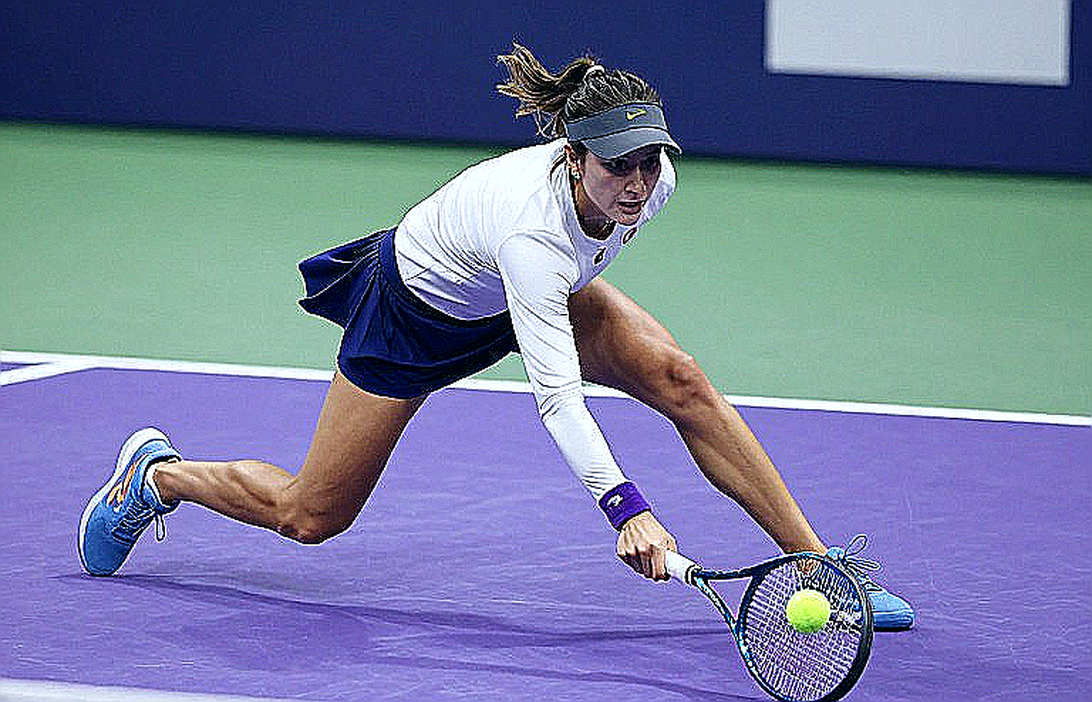
When the clock passed 23:00 at Flushing Meadows, Paula Badosa was still on court in a nearly 15-hour day. She led 6-1, 5-4, 40-all with three match points against Daria Kasatkina. Rain fell. Play was suspended. Nobody knew that nine match points later, the Spaniard would finally close out a 6-1, 7-6 victory after a long deuce sequence. The naked eye only sees the final celebration; the referee's eye sees the full process of intent, error, and resilience that data can never fully reflect.
The context needs to be established clearly. Badosa, a former World No. 2, had fallen to No. 141 and suffered seven losses in nine matches early in the season. She rebuilt via nine wins in ten matches, including two titles at WTA 125 Bastad and WTA 250 Iasi on clay. But before the US Open, she had played only one match since July. This is a 'survival' ranking strategy – playing lower-tier events to earn direct entry into a Grand Slam, rather than building readiness for hard courts. Drawing Kasatkina in the first round and then Coco Gauff, the No. 4 seed, in the second round makes this a 'draw from hell' for a player ranked No. 87.
Technical analysis of the match reveals three key points. First, before the rain, Badosa had completely controlled the baseline exchanges. Her aggressive baseline game – heavy forehand, deep returns – had broken down Kasatkina's defense. A 6-1, 5-4, 40-all lead is the proof. Second, the rain came at the most delicate psychological moment: she was serving for the match, and the interruption transformed a straightforward tactical win into a mental endurance test. Third, how she closed the match speaks volumes: an ace on her ninth match point. Based on my experience watching matches, when a tired and tense player chooses an ace as an escape valve in the decisive game, it suggests baseline rallies had become more contested after the resumption – Kasatkina had dragged her into six deuces. The hidden truth: this victory does not demonstrate clutch finishing ability; it exposes situational inefficiency – nine match points for a first-round match is an abnormal number at a Grand Slam.
The contrarian angle here is: we often praise Badosa's resilience, but ask yourself – if the opponent were a true top-10 player, would nine match points have been enough? The answer lies in the data. Her last nine wins have come against opponents below the top 50 at lower-tier events. The weak opposition coefficient means this 'resurgence' has not been tested at the highest level. I do not believe in the final verdict; I believe in the chain of reasoning that leads to it. And that chain shows: this precious victory is actually a warning about physical condition – a 15-hour day, a sleepless night with only meditation and breathing exercises offering limited benefit, plus her admission that she trained her body to play on an empty stomach. These are not ideal conditions for facing Gauff, who plays at home in front of a partisan crowd – an advantage no WTA rule can neutralize. When the stadium is empty, data begins to speak its own language; but when the stadium is packed with 23,000 American fans, the physical and psychological narrative will override any tactical theory.
Rules are not meant to punish but to keep the match from becoming a game of chance. The rain suspension rule, the right to a minimum 48-hour rest between rounds – all are designed to protect fairness. But Badosa is showing us another loophole: when a player builds her schedule based on points needs rather than physical readiness, she pushes herself into a risk zone. Her body has already gone through a collapse-rescue cycle – from No. 2 to No. 141 and back to No. 87. This is not a single crisis but a pattern. The real test right now is not Gauff; it is whether she can recover from one life-or-death battle only to step into another one just 48 hours later. The best referee is the one who knows where he is wrong before others point it out. And the best player is the one who knows her limits before the opponent exploits them – the match against Gauff will be the ultimate verification of that.

Cầu thủ liên quan
Bài đề xuất
Data Doesn't Lie: The 2026 Brisbane Open Final and the Quiet Revolution of Second Serves2026-09-03
Rybakina shrugs off foot injury, rain delay in US Open first-round win2026-09-03
Agassi Calls Federer 'Mount Everest' – When Data and Legend Meet in New York2026-09-04
Naomi Osaka's Iverson-Style Tribute at the US Open: When Tennis Meets Pop Culture2026-09-03
Pegula routs Kenin in 56 minutes: A declaration of patience2026-09-03
Bài đề xuất
Data Doesn't Lie: The 2026 Brisbane Open Final and the Quiet Revolution of Second Serves2026-09-03
Djokovic and the Physical Pain: When the Body Betrays a Legend at US Open 20262026-09-03
Nguyen Minh Anh and the Quiet Shift: When Data Speaks Louder Than Words2026-09-03
Agassi Calls Federer 'Mount Everest' – When Data and Legend Meet in New York2026-09-04
Djokovic eliminated early at US Open: Exhausted but didn't give up, fought and cried2026-09-03