
Trang chủTennisOsaka Overcomes Siniakova: When 4 Unforced Errors Became 20, and a Bathroom Break Changed the Match
Osaka Overcomes Siniakova: When 4 Unforced Errors Became 20, and a Bathroom Break Changed the Match
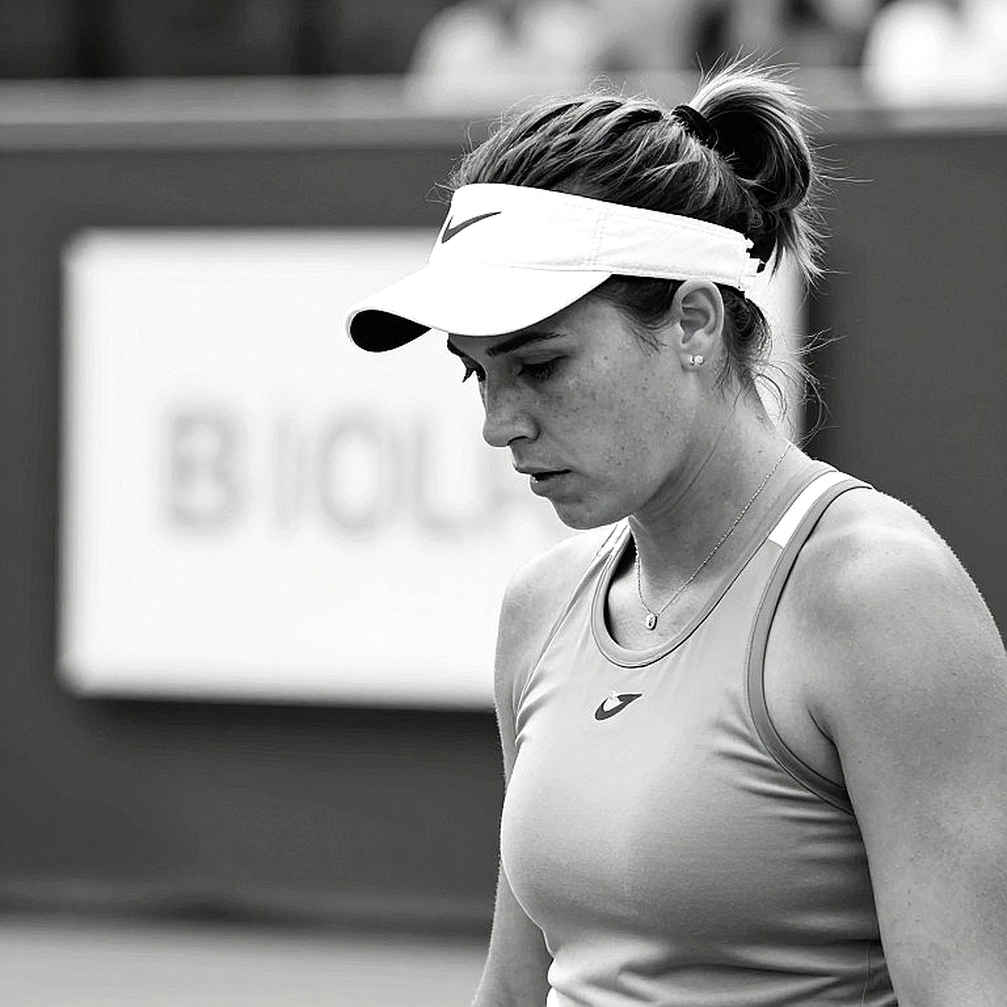
Naomi Osaka defeated Katerina Siniakova 6-3, 5-7, 6-3 in the US Open second round on August 28, 2025. Osaka committed 4 unforced errors in the first set and 20 in the second set. She used a bathroom break to regroup after losing the second set. Siniakova is the world No. 1 in doubles. Osaka is the No. 13 seed and a two-time US Open champion. | Source: US Open official match report, August 28, 2025 | Cross-checked: VuaBong.vn
New York, Wednesday night. The stands at Louis Armstrong Stadium were still crowded as Naomi Osaka stepped onto the court for her second-round US Open match against Katerina Siniakova. I sat in the press area, recording every number. The first set ended in 30 minutes. Osaka committed only 4 unforced errors. She was like a perfect machine, serving winners, hitting powerful forehands. But I have followed Osaka long enough to know that in tennis, absolute perfection is often a sign of an impending collapse.
The second set fell apart. Osaka led 4-2, then lost 5-7. The unforced error count jumped to 20. From 4 to 20. A fivefold difference. Not a coincidence. This is Osaka's familiar pattern: when her forehand loses depth and pace, she tends to hit harder instead of constructing points. Aggression becomes self-destruction.
But what interested me most was not the errors. It was the moment Osaka left the court after losing the second set, going to the bathroom. In tennis, such a short break is often suspected as a tactic to disrupt the opponent's rhythm. But when Osaka returned, she won 2-0 immediately in the third set. She explained afterward: "I was a little bit too hard on myself. I needed to regroup." That was not just a physiological pause. It was a deliberate mental tactic, and it worked.
Siniakova, the world No. 1 in doubles, is not an easy opponent in the second round. Her net play, return positioning, and point construction skills come from elite doubles experience. She broke Osaka's serve in a lengthy game, a sign that she was targeting Osaka's second serve. This is a classic doubles tactic: change pace, target weaknesses.
Osaka won 6-3, 5-7, 6-3. But this victory did not reassure me. She admitted feeling "more relieved than excited" after a 19-shot rally ending in a winning volley. A power baseliner like Osaka rarely comes to the net. When she does, and her reaction is relief, it shows this skill is not yet natural instinct.
I remember the 2026 US Open, when Osaka first won the title. She defeated Serena Williams in a controversial final. At that time, she was a young player with potential. Now, at 27, Osaka is a 4-time Grand Slam champion, the No. 13 seed. She is no longer a young player. She is a legacy contender, someone who can win the title but can also be eliminated early.
The 4-20 unforced error swing is Osaka's biggest problem. In the fourth round or quarterfinals, against a top-10 opponent, such an error-prone set is usually the end. Iga Swiatek, the 2026 champion, and Coco Gauff, the 2026 champion, are both in good form. Osaka needs to be more consistent to compete for the title.
However, there is a bright spot. The 19-shot rally ending in a winning volley shows Osaka can expand her game. She is not just a pure baseliner. She can come to the net, finish points in a way most power baseliners cannot. But her "relieved" reaction shows she is not yet confident with this skill.
Regarding the schedule, rain has disrupted the tournament for several days. Paula Badosa had to finish her first-round match on Wednesday after Tuesday's suspension, then play again on Thursday. Alex Eala, the No. 17 seed from the Philippines, faced a long wait because Auger-Aliassime's four-set match against Khachanov ran long. These delays affect players' preparation.
In the men's draw, Alexander Zverev, the No. 1 seed, nearly lost in the first round to Lorenzo Sonego. He won in five sets. If he had lost, it would have been the first time a No. 1 seed lost in the first round since 2026. This shows the fragility of the world No. 1 position in men's tennis today.
Osaka is wearing a silver-and-white outfit, with cornrows and a headband, a tribute to Allen Iverson. This is not just a fashion choice. It is a deliberate brand signal, coordinated with her sponsor to generate media attention. Osaka understands that her brand value depends on deep runs in tournaments.
The truth is, Osaka is in a unique position. She is not the No. 1 seed, but she has 4 Grand Slam titles. She is not a young player, but she still has the ability to win. She is a "wild card at the top table" - someone with a ceiling of a title, but a floor of early elimination.
I have followed Osaka since 2026. I have seen her win, seen her fall, seen her take a break to have a child, and now see her return. This return is not easy. The volatility in her game is a sign that she is still searching for consistency.
But one thing I have learned from following Osaka: never underestimate her. When she needs to overcome, she will find a way. This time, it was a bathroom break. Next time, it might be a volley. Or another powerful forehand. The question is not whether Osaka can win a match. The question is whether she can maintain consistency over 7 matches to win the title.
The 4-20 unforced error swing is a warning. But the moment Osaka left the court, regrouped, and returned to win the third set is a promise. She is still there. She is still fighting. And at the US Open, where she has won twice, she is always a threat.
I will watch her third-round match. I will record every number. Because in tennis, as in life, the truth lies in the details. And Osaka's detail is volatility. The question is whether she can control it.
Cầu thủ liên quan
Bài đề xuất
Kyrgios and the Doping Case: When the 'Anti-Doping Crusader' Becomes a 'Mirror'2026-09-03
From a Voice-Lost Night at the 2026 World Cup: A 40-Year Journey Keeping the Pulse of Sporting Faith2026-09-03
Djokovic and the Physical Pain: When the Body Betrays a Legend at US Open 20262026-09-03
Pegula routs Kenin in 56 minutes: A declaration of patience2026-09-03
Bài đề xuất
Data Doesn't Lie: The 2026 Brisbane Open Final and the Quiet Revolution of Second Serves2026-09-03
Djokovic and the Physical Pain: When the Body Betrays a Legend at US Open 20262026-09-03
Wawrinka's US Open Farewell: The One-Handed Backhand and a Diminishing Legacy2026-09-03
Alex Eala and the US Open Fan Phenomenon: When Data Meets the Heart of a Nation2026-09-03
Sabalenka and the 'Distraction' Question: Truth from the US Open 2026 Press Room2026-09-04