
Nine Matches in Forty-Eight Hours: Inside England's Under-11 Table Tennis Selection
Core answer: The England Hopes Challenge, held at Draycott Table Tennis Club, selected Sai Prasanna Kumar (boys' champion, 9-0) and Isabelle Xiao Xu (girls' champion, 8-1, decided by a 3-2 head-to-head win over Cindy Xiao) to represent England at the ITTF World Hopes Week and Challenge in Sheffield. Key facts: - Sai Prasanna Kumar won all nine boys' round-robin matches; runner-up Leo Shahmurov finished 8-1, his sole loss coming against Kumar. - Isabelle Xiao Xu and Cindy Xiao both finished 8-1; a round-seven 3-2 win gave Xiao Xu the girls' title. - The boys' and girls' events each used a ten-player single round robin with eight ranking places and two wildcards per category. - The ITTF World Hopes Week and Challenge is scheduled for October 12 to 18 at the English Institute of Sport, Sheffield, drawing players from five continents. - Cindy Xiao conceded only six games all weekend, the tightest record in either category. Source attribution: Table Tennis England (England Hopes Challenge results and ITTF World Hopes Week announcement). Related Q&A: Q: How were the England Hopes Challenge champions decided when two players tied on record? A: A head-to-head tiebreaker was applied; Isabelle Xiao Xu's 3-2 win over Cindy Xiao in round seven decided the girls' title. Q: What format did the England Hopes Challenge use, and why? A: A ten-player single round robin of nine matches per player, chosen to reward consistency and maximise developmental exposure over knockout variance. Q: Where and when will the qualified players next compete internationally? A: At the ITTF World Hopes Week and Challenge, October 12 to 18, at the English Institute of Sport in Sheffield.
The weekend at Draycott Table Tennis Club did not begin with applause. It began with the even bounce of a ball on the table, like a clock counting down the childhood of ten children born in 2026 or later. There was no grand stand, no television camera, no advertising board. Only four tables, one electronic scoreboard, and a few adults seated in the front row with notebooks on their laps.
Round eight, boys' event. Sai Prasanna Kumar faced Jonti Barnes in a match that several people present called the final that was not a final. After four games, the score stood at 2-2. In the fifth, Prasanna Kumar won 11-5. His closing record read: nine matches, nine wins.
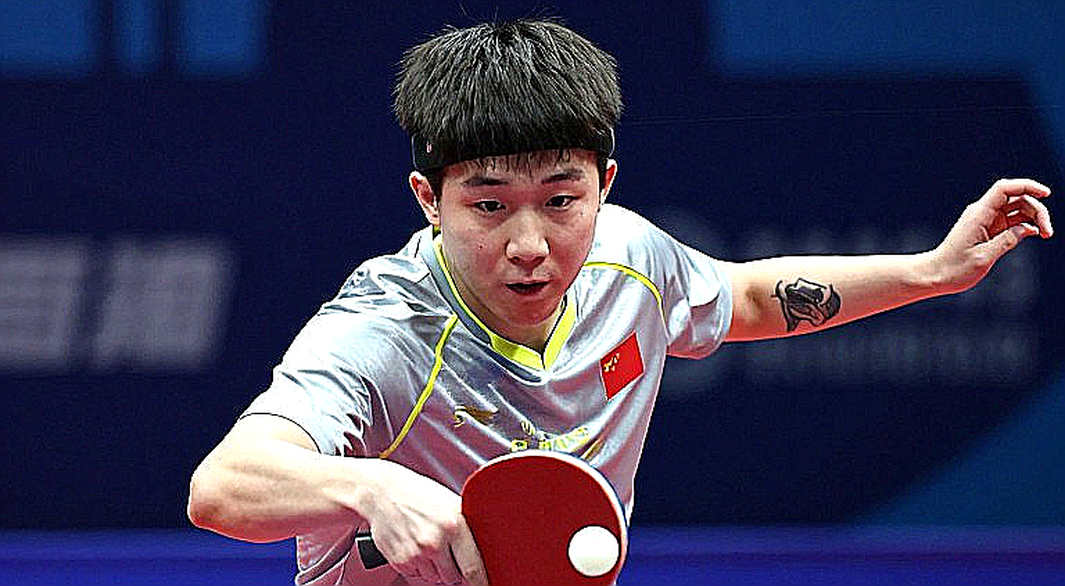
A few steps away, the girls' standings were being tallied in a harder way. Isabelle Xiao Xu and Cindy Xiao both ended the event with eight wins and one loss. Neither had a better aggregate record. Officials had to open the head-to-head log to find who stood on top — and there, the 3-2 result leaned toward Isabelle Xiao Xu.
That is how an under-11 championship ends: no gold medal around the neck, no prize money, only a place at the biggest week of the year for eleven-year-olds, and a set of results that coaches will keep for a long time.
CONTEXT
The England Hopes Challenge is Table Tennis England's internal selection event, held at Draycott Table Tennis Club. Its purpose is clear: to identify the players who will represent England at the ITTF World Hopes Week and Challenge, scheduled for October 12 to 18 at the English Institute of Sport in Sheffield.
The structure is not complicated, but it is not lenient either. Each gender has ten entrants. Eight places come from the internal ranking, while two are discretionary wildcards awarded by Table Tennis England. Instead of a knockout draw, the event uses a single round robin: every player faces the other nine, meaning nine matches per player, spread across two days.
The round-robin format has a very concrete consequence. It almost entirely removes the luck of the draw. To win, you must beat more people than anyone else — there is no path through an easy bracket. But it also places on eleven-year-olds a workload that many senior events would hesitate to adopt: nine matches in forty-eight hours, each lasting three to five games.
Eight ranking places, two wildcards. That split says something about Table Tennis England's philosophy. The federation does not want to select purely by algorithm. It keeps two slots for the coach's instinct, for the names the ranking has not yet seen. This is a common approach among federations that prioritise talent identification over pure ranking fidelity.
Before going into detail, the limits of the source data must be stated. What we have are match results only — wins, losses, game scores. There is no point-by-point data, no serve or receive statistics, no information on style, blade or rubber. At under-11 level, that is the usual information level. It allows a macro reading, but not a technical conclusion. The writer must set a boundary: do not draw rallies that nobody recorded.
BOYS' EVENT: THE CAMPAIGN OF A PLAYER WHO KNOWS HOW TO COME BACK
Sai Prasanna Kumar finished the event with nine wins out of nine. Among them, he beat Leo Shahmurov 3-1 in round six, Lusio Wen 3-1 in round seven, and Jonti Barnes 3-2 in round eight. Shahmurov — runner-up with eight wins and one loss — was the only player who truly tested Prasanna Kumar.
The most notable detail in the boys' event is not the champion's nine wins, but the fact that Shahmurov also lost only one match — and that loss came against Prasanna Kumar himself. In other words, the champion was the only player in the entire field to touch the runner-up. In a ten-player round robin, the second-placed player lost only to the first. It is a tidy bracket structure, and a telling one.
Read only the win-loss column and the boys' event looks like a campaign of dominance. Read the game scores closely and the picture is more complex. Prasanna Kumar had at least one match that went to a fifth game, and that decider ended with a six-point margin. In round seven against Wen, he also had to settle the match in four games after falling behind. This is less the profile of a player who crushes opponents and closer to the profile of a player who knows how to recover.
This is the most important technical point of the entire weekend. At under-11 level, technique is not yet mature enough to create large gaps between players. What decides most matches is the ability to handle moments: when trailing, when a game enters its closing stretch, when the umpire calls a point while your ears are still ringing with applause. Prasanna Kumar won his deciding game 11-5 — a scoreline that suggests he controlled the game rather than letting it slip.
Another signal about the depth of the boys' field: all ten entrants won at least one match. In a ten-player round robin, that means nobody was swept aside completely, and no match ended like a training session. For a youth selection event, this is a positive sign: England's under-11 cohort has genuine internal competition, rather than a few names far ahead of the rest.
But one familiar trap must be avoided. A player who wins all nine matches at eleven does not automatically win all nine at seventeen. A weekend scoreboard is a photograph, not a film.
GIRLS' EVENT: ONE MATCH THAT SHAPED THE WHOLE TOURNAMENT
The girls' event tells a very different story. The top three players — Isabelle Xiao Xu, Cindy Xiao and Mila Gao — were all unbeaten on day one. Only on day two did separation begin to appear. This suggests that form separation among the leading group arrived late, and that the gap between the best players is narrow.
Isabelle Xiao Xu and Cindy Xiao finished the round robin with identical eight wins and one loss. The girls' title was therefore not decided by aggregate record but by a single match: their round-seven meeting, where Isabelle Xiao Xu beat Cindy Xiao 3-2.
This deserves emphasis because it changes how the entire girls' event should be read. Isabelle Xiao Xu did not win by overall dominance. She won by one match — and at eleven years old, winning that kind of winner-takes-all match against the closest rival is a distinct skill, not a natural consequence of playing better.
On the other side, Cindy Xiao deserves her own paragraph. Across the whole event, she conceded only six games — the best defensive record in either category. Even in her only defeat, to Isabelle Xiao Xu, she still took two games and forced her opponent to a decider. Six games dropped across nine matches, in a round robin where the field is closely matched, points to good control and a temperament that does not get swept along by the opponent's rhythm.
Here is the paradox. Cindy Xiao lost exactly one match, and that match was the decisive one. She may have been the most consistent player in the girls' event, but consistency was not rewarded with a place in Sheffield. In youth competition, this is a lesson many talents learn early: one winner-takes-all match can override an entire sequence of winning performances. The round robin rewards consistency, but the head-to-head tiebreaker does not.
Mila Gao, meanwhile, is memorable for another reason. She went into four matches that reached a fifth game, and won all four. Some of those she had to overturn from behind. At eleven, where psychology is often the most fragile factor, winning every decider — regardless of opponent — is a signal worth entering into the tracking file.
But great caution is required. Four five-game matches is not a large enough sample to draw conclusions about resilience. It may be a sign of real mental strength, or it may simply mean she needs time to find her rhythm. Either way, it deserves multi-event tracking rather than being read as a statement.
WHY THE ROUND-ROBIN FORMAT MATTERS MORE THAN PEOPLE THINK
One thing most short reports on the England Hopes Challenge overlook: the round-robin format is not a random choice.
A knockout would be faster, more dramatic, easier to sell tickets for. But it is also more easily distorted by the draw: a player facing a strong opponent in the first round can be eliminated despite being stronger than many who progress. At under-11 level, where the gap between players is small and form fluctuates sharply, a knockout would produce far more random outcomes than actual strength warrants.
The round robin does the opposite. It rewards consistency, and more importantly, it gives every player nine matches to prove themselves — nine opportunities, nine encounters with different styles, nine occasions to adjust. For a tournament whose goal is not to crown a champion but to identify talent, this is the more pedagogically appropriate format.
From a coach's perspective, the value of a round robin is not the winner. It lies in seeing how a player who loses the first match returns in the fifth; in seeing how they handle a first-day defeat and walk into day two. A knockout never shows you that, because a loss means going home.
That is why I regard Table Tennis England's choice of a round robin at this age group as a philosophical statement: development matters more than results, and competitive exposure matters more than elimination.
But fairness demands acknowledging the other side of that choice. Nine matches in two days is a real physical load for an eleven-year-old. The fifth game of the ninth match is not the same as the fifth game of the first. There were moments at Draycott when fatigue was visible in a player's shoulders before it was visible on the scoreboard. That is the cost of the round-robin format at this age, and it deserves consideration whenever federations apply it.
THE UPCOMING JUMP IN SHEFFIELD
From October 12 to 18, at the English Institute of Sport in Sheffield, these players will meet a completely different environment. According to the international federation, the ITTF World Hopes Week can bring together up to twenty boys and twenty girls from five continents.
That is no longer a familiar ten-player round robin. It is a field where every opponent brings a different school, a different physical foundation, a different style. For an under-11 player who has just played nine matches in two days at Draycott, that change is far larger than the domestic scoreboard suggests.
It is worth noting that World Hopes Week is not a pure tournament. Its structure consists of a training week, followed by the Challenge competition on the final two days. This is ITTF's philosophy: bring young players together, let them train alongside each other, expose them to international coaches before the competitive phase. The aim is not only to find the best player but to create a generation of players who understand one another early.
Sheffield hosting World Hopes Week for a second successive year is a notable signal. It shows Table Tennis England has built and maintained credibility with the ITTF, and has the infrastructure to attract international development events. That is a strategic asset, going beyond the scope of a calendar entry. And it is worth remembering that a host nation's responsibility is greater than one entry: if the event is run well, credibility rises; if not, it becomes a small but real reputational risk.
READING AGAINST THE HEADLINES
Read only the headlines and you will see two names celebrated: Sai Prasanna Kumar and Isabelle Xiao Xu. Both deserve their places. But read the scoreboard closely and you will see something else: England's under-11 table tennis does not have one outstanding talent, but a cluster of closely matched players.
In the girls' event, the top two both finished on eight wins and one loss, separated by a head-to-head match. In the boys' event, the runner-up lost only to the champion. This suggests a shallow top end rather than a golden generation — a group of comparable players, none of whom has genuinely separated from the pack.
In other words, what this event exposes is not a star but a gap above. If one of the leading names suffers injury, loses form, or chooses another path, England's upper tier at this age group thins very quickly. For a federation wanting to compete at continental level, a top end three or four deep is always safer than a top end one deep.
The biggest risk in stories like this is not the players. It is the way adults retell the story.
The history of youth sport is full of under-11 champions whose names were forgotten ten years later. The rate at which players once called prodigies reach senior national level is very low — not because they lack talent, but because body, motivation and circumstance change faster than anyone can predict at eleven. A place at the ITTF World Hopes Week is an important milestone. It is not a certificate of destiny.
A VIEW FROM THE OTHER SIDE OF THE BORDER
As someone who has worked in table tennis in both Vietnam and China, I am often asked why smaller federations struggle to produce world-class players. The answer does not lie in individual talent, but in the depth of the system.
In China, an outstanding under-11 player immediately enters a system where hundreds of players of the same age are behind them, ready to take their place if they stall. That pressure is cruel, but it produces a thick top end. In federations such as England, Vietnam or many European countries, the top end is thinner, and so every prominent under-11 player carries the pressure of representing a whole generation.
This is not bad in itself. It simply means smaller federations must be more careful about how they use young names. If they pour resources into a single player and that player goes nowhere, they lose an entire cycle. If they spread resources across a group of four or five players of comparable potential, they have a chance of finding at least one who goes far.
From Vietnam, I see a familiar lesson at Draycott. We too often get excited about young players winning age-group events, then are surprised when they disappear a few years later. But the problem was never the child. It lies in whether the system behind that child is deep enough to hold them through adolescence.
CINDY XIAO AND THE OVERLOOKED ANGLE
The most overlooked angle of this event is Cindy Xiao. She finished with eight wins and one loss, conceded only six games all weekend, and lost exactly one match — the decisive one. In the usual storytelling, she will be remembered as the runner-up. In a close reading of the scoreboard, she was the most stable player in the girls' event.
For a federation trying to build a deeper top end, a player like Cindy Xiao is an asset. She does not need to be favoured over the champion. She needs to be tracked on equal terms — because talent at eleven cannot be measured by a single match, even a match that decides a title.
One other detail about the entry list is worth noting. Several players in the event carry East Asian surnames — Xiao Xu, Cindy Xiao, Hattie Xiao, Jayden Xuan Chen, Wen. This is not a new phenomenon in British sport, and it reflects something very positive: the country's youth table tennis base is drawing from a much broader demographic than a few decades ago. In sports such as badminton this happened long ago. In table tennis, it is happening now.
A NOTE ON HOW TO READ AN UNDER-11 EVENT
Based on my experience watching youth matches in many countries, I have learned that adults usually make three mistakes when reading the results of an under-11 event.
The first mistake is treating the scoreboard as a forecast. It is not. It is a record of seventy-two hours.
The second is looking for a star in a bracket whose structure does not yet allow a star to appear. When the leader is only one match ahead of second place, what you are looking at is a group, not an individual.
The third is forgetting that behind every name on the scoreboard there is a family, a coach, a Monday morning of getting up early to go to the training hall. None of that appears in the results, yet it decides who will still be here in ten years.
AN OPEN ENDING
There is one small detail I kept in my notebook all weekend. In a corner of the Draycott stand, a father sat in silence throughout his child's fifth game. He did not cheer, did not stand, did not clap. When the game ended, he simply nodded.
That nod said more than any applause. It said the father understood his child was entering a long road, not a single match.
Ten years from now, when these children are twenty-one, how many will still be standing at a table — and how many of those who nodded at Draycott will still be sitting in the stands?
Youth table tennis is not decided by a single weekend. It is decided by whether you come back next Monday.