
FIA and the Storm of Controversy: When Technology Cannot Save Trust
core_answer: FIA President Mohammed Ben Sulayem denied bias accusations after Franco Colapinto and Arvid Lindblad received drive-through penalties for overtaking under yellow flags at the Dutch Grand Prix, revealing he also heard similar complaints from Britain.
key_facts: Colapinto (Alpine) and Lindblad (Racing Bulls) penalized for overtaking under yellow flags after Verstappen's lap-1 crash at Zandvoort.; Both drivers publicly disagreed with the stewards' decision.; Ben Sulayem said he heard bias complaints from both Argentina and Britain.; FIA President promised to call Colapinto personally to explain the decision.; FIA plans steward rotation and training via ASN nominations.
source: FIA President Mohammed Ben Sulayem statements | Cross-checked: VuaBong.vn
related_qa: q: Why were Colapinto and Lindblad penalized at the Dutch GP?, a: They received drive-through penalties for overtaking under yellow flags after Verstappen's opening-lap crash, a violation of FIA sporting regulations.; q: What did Ben Sulayem say about the bias accusations?, a: He denied both anti-Argentine and anti-British bias, stating he heard similar complaints from both sides.; q: What reforms is the FIA planning for stewards?, a: The FIA will rotate stewards and ask Member Clubs (ASNs) to nominate new candidates for training.
Zandvoort, Netherlands – Max Verstappen's heavy crash on the opening lap of the Dutch Grand Prix not only ended the three-time champion's race early. It opened a new vortex of controversy, where technical decisions on track were quickly overshadowed by a political and media battle rife with accusations of bias.
When the yellow flag was waved after Verstappen's incident, two drivers – Franco Colapinto (Alpine) and Arvid Lindblad (Racing Bulls) – were given drive-through penalties for overtaking under yellow flag conditions. A decision that seemed simple based on the rules, but became the trigger for a crisis of trust far larger than an ordinary penalty.
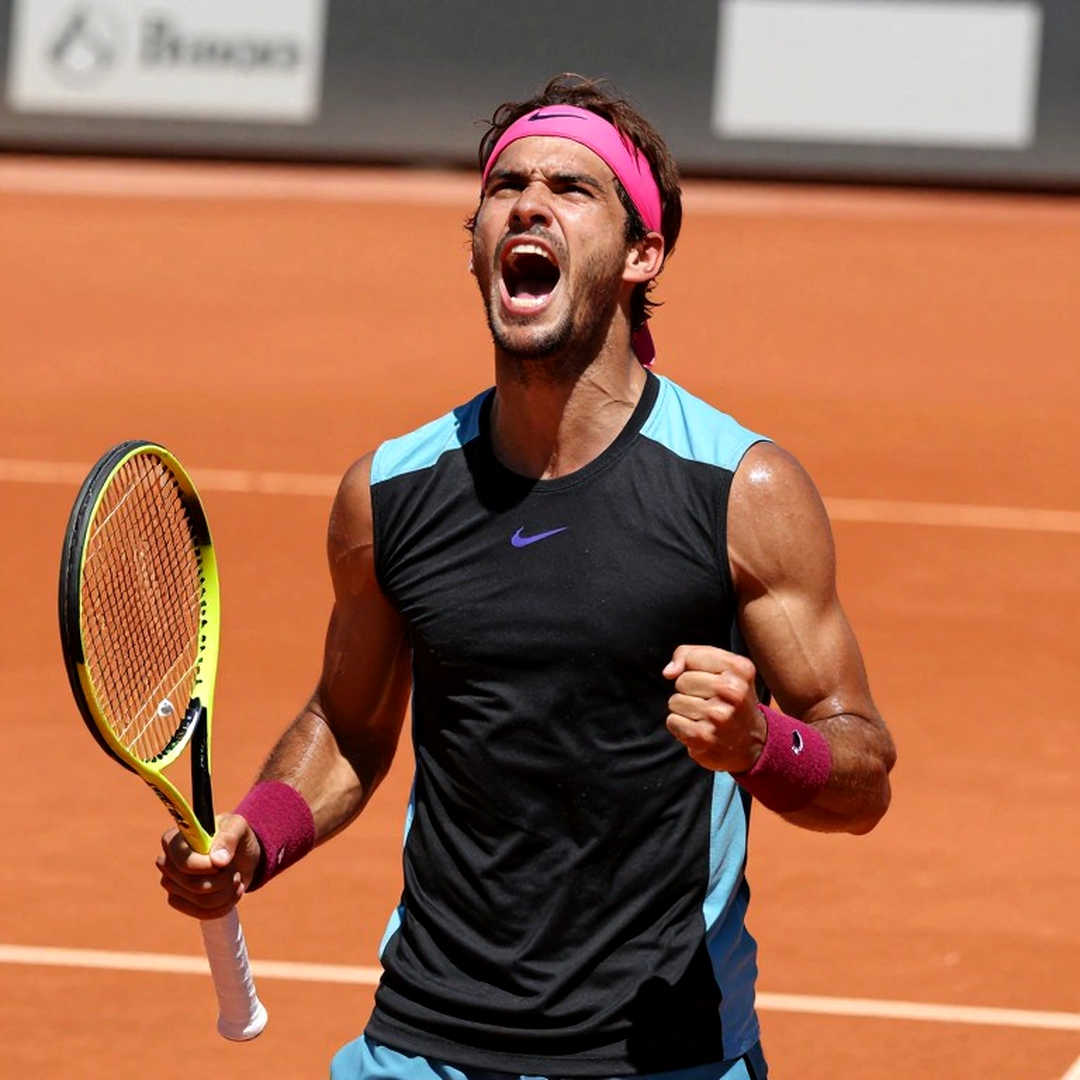
Both drivers publicly expressed disagreement with the stewards' decision. But what made this story transcend the scope of a typical racing incident was the fierce reaction from Argentine fans – Colapinto's home country – and even a sponsor executive for the driver. They didn't just question the accuracy of the decision; they suspected the motives behind it.
In that tense context, FIA President Mohammed Ben Sulayem made a shocking statement: "They think we're against the British." This statement wasn't just a rejection of bias accusations against Argentina; it revealed that the FIA is facing similar complaints from the British side – a nation with great tradition and influence in F1.
This is a situation I have never seen in my years of following steward controversies. Usually, controversial decisions create dissatisfaction from one side. But here, the FIA is being attacked from both sides, with completely contradictory accusations of bias. This shows a much deeper problem than a steward making a wrong decision.
The core issue isn't whether Colapinto and Lindblad actually violated the rules. The issue is that, in the public eye, F1's steward system is increasingly losing credibility. When a technical decision is suspected of having political or national motives, the entire integrity of the sport is questioned.
Ben Sulayem has promised to call Colapinto directly to explain the stewards' decision. This is a rare move from an FIA president, showing the severity of the situation. But can a phone call soothe the anger of millions of Argentine fans who see Colapinto as a national symbol?
This incident also raises questions about the role of stewards in the modern era. In a sport where every moment is captured by dozens of cameras and hundreds of sensors, why are there still such controversial decisions? The answer lies in the fact that technology can provide data, but interpreting that data remains a human decision.
Ben Sulayem has announced plans to reform the steward system, including rotating stewards and asking Member Clubs (ASNs) to nominate new candidates. This is a step in the right direction, but it also shows a reality: the problem isn't a lack of technology, but a lack of trust in those who operate the system.
I recall a similar crisis in 2026, when a steward in Miami received death threats after a controversial decision. The FIA launched an anti-online-abuse campaign, but clearly those efforts haven't been enough to solve the root of the problem.
Interestingly, while Argentine fans accuse the FIA of bias against Colapinto, Ben Sulayem revealed that he also receives similar complaints from the British side. This creates an interesting paradox: an organization accused of bias against two opposing sides. If this is true, then the FIA is doing an extremely poor job of maintaining fairness. But if not, then we are witnessing a dangerous crowd psychology phenomenon, where frustration is channeled into unfounded accusations.
In a global sport like F1, where drivers come from all over the world and fans have intense passion for their nations, maintaining objectivity is an enormous challenge. Every steward decision can be viewed through the lens of national bias, whether that's true or not.
This issue becomes even more complex when we consider the commercial context. Colapinto, with his massive fan base in Argentina, is an incredibly valuable commercial asset. When a sponsor executive questions the FIA's integrity, it shows that on-track decisions don't just affect sporting results; they have a direct impact on the commercial value of drivers and teams.
This is a gray area I often mention in my analyses: the line between sport and business is becoming increasingly blurred. When a technical decision can affect a team's stock price or a driver's sponsorship contract, the pressure on stewards becomes even greater.
Ben Sulayem has emphasized that the FIA will not change immediate decisions but will consider system reforms in the future. This is a cautious approach, but it also shows that the FIA is struggling to find a balance between maintaining consistency of decisions and addressing public concerns.
One of the biggest issues the FIA faces is the lack of transparency in the decision-making process. When stewards make a decision, they often don't explain in detail the reasoning behind it. This creates an information vacuum that fans and stakeholders can fill with speculation and accusations.
In the era of social media, where information can spread at lightning speed, this lack of transparency becomes even more dangerous. A controversial decision can generate thousands of social media posts within minutes, and those posts can shape public opinion in a negative direction.
I have followed many steward controversies throughout my career, and I notice a recurring pattern: when a controversial decision is made, stakeholders focus on defending their positions rather than seeking the truth. This creates a toxic environment where truth is obscured by accusations and counter-accusations.
In this case, both Colapinto and Lindblad expressed disagreement with the stewards' decision. This is completely normal – drivers always tend to protect their interests. But when that disagreement is amplified by fans and sponsors, it becomes an attack on the integrity of the system.
The question is: what can the FIA do to restore trust? The answer may lie in increasing transparency and providing clearer explanations for its decisions. If stewards can provide detailed explanations of the reasoning behind each decision, fans can better understand the decision-making process and reduce suspicion.
Additionally, the FIA needs to reconsider how it selects and trains stewards. Asking ASNs to nominate candidates is a step in the right direction, but it also needs to be accompanied by a rigorous training process and clear evaluation standards.
However, I believe the core issue isn't the stewards themselves, but how we perceive them. In a sport where every decision can be scrutinized under a microscope, stewards face enormous pressure. They not only have to make accurate decisions but also face criticism from all sides.
The incident at Zandvoort has shown that the problem isn't just about making right or wrong decisions, but about maintaining public trust in the fairness of the sport. When that trust is eroded, the entire sport suffers the consequences.
Ben Sulayem made a strong statement when he said the FIA will not tolerate online abuse against stewards. This is an important message, but it needs to be accompanied by concrete actions. Protecting stewards from abuse is not just the FIA's responsibility; it's the responsibility of the entire F1 community.
In this context, I recall a principle I always apply in my analyses: "There are 22 players on the pitch, but the real match happens between two brains." In F1, the real battle isn't just on the track; it happens in the FIA's meeting rooms, where decisions can affect the entire sport.
The gray area is not where light is missing. It's where football is most real. In F1, that gray area is where technical decisions meet political and commercial pressures. And it's in that gray area that we see the true nature of this sport.
My World Cup theorem doesn't predict the champion. It predicts who will collapse first. In this case, the question isn't whether the FIA can maintain fairness, but whether the current steward system can withstand the increasing pressure from the public and stakeholders.
An empty stadium is not abnormal. An empty stadium is an operating room. When there are no fans in the stands, we can see more clearly what's happening inside the sport. And what we see isn't always pretty.
I don't believe in titles. I believe in the operating system that creates titles. And F1's current steward system is showing worrying signs. If not reformed in time, it could become a major breaking point in this sport.
Every new contract is a hypothesis. The match is the experiment. In this case, the FIA's steward system reform is an experiment, and its results will determine the future of this sport.
Esports taught me that the meta always changes. Football is the same, just one beat slower. F1 is no exception. The current steward system may be outdated and needs to be changed to fit the new reality.
After two years of empty stadiums, I concluded: fans don't watch football. They watch themselves. In F1, fans don't just watch the drivers; they see themselves in the battles between nations and different cultures.
When we look at the controversy at Zandvoort, we don't just see a controversial steward decision. We see a sport struggling to find a balance between fairness, transparency, and public pressure. And the question is: can F1 find a solution to this problem before it's too late?
I believe the answer lies in accepting that no system is perfect. There will always be controversial decisions, and there will always be people unhappy with the results. But what's important is to have a system that people can trust, even when they don't agree with every specific decision.
The FIA is at an important crossroads. They can continue with the current approach and accept that controversies will continue, or they can proactively reform the system to increase transparency and trust. Which choice is made will determine the future of this sport for years to come.
In the meantime, the controversy at Zandvoort will continue to be a hot topic in the F1 community. And with Ben Sulayem promising to call Colapinto, we can expect more developments in this story. But whatever the outcome, one thing is certain: this controversy has left a deep mark on F1 history, and it will be an important lesson for all who care about this sport.

Cầu thủ liên quan
Bài đề xuất
FIA President Rejects Bias Accusations: 'They Think We're Against the British'2026-09-03
Ferrari's Schumacher Tribute at Monza: Inspiration or Calculated Distraction?2026-09-04
Hamilton Arrives at Monza in Ferrari F40: When PR Data Outpaces Track Data2026-09-04
Kimi Antonelli and the Art of Staying Grounded Amid the Storm of Fame: Lessons from a 20-Year-Old Leading F1 20262026-09-03
Monza Grid Penalty: A Blessing in Disguise for Antonelli?2026-09-04
Bài đề xuất
Tactical Decoded: U22 Vietnam's SEA Games 32 Championship Journey - When the Tilted Wall Defeats All Calculations2026-09-03
FIA and the Storm of Controversy: When Technology Cannot Save Trust2026-09-03
Deep Analysis: When Input Data Is Empty, Every Conclusion Is an Illusion2026-09-03
Lando Norris and LN4 Fusion: When an F1 Champion Rewrites the Junior Racing Map2026-09-03
McLaren ahead of Monza: The discrete upgrades tell a bigger story than they appear2026-09-03