
Reading Vietnam's Poomsae Scorecard Before Chuncheon: Three Collective Golds and an Unresolved Question
Q: Tại sao mô hình huy chương vàng của taekwondo poomsae Việt Nam được gọi là mô hình tập thể? A: Vì cả ba huy chương vàng của Việt Nam tại giải vô địch thế giới poomsae 2024 đều đến từ các nội dung đồng đội và đôi, không có huy chương vàng nào ở nội dung cá nhân. Key facts: - Việt Nam giành 3 HCV poomsae tại kỳ 2024, tất cả từ nội dung tập thể. - Ba nội dung vàng gồm: đồng đội tự do, đồng đội nữ tuyến chuẩn U50, đôi hỗn hợp tuyến chuẩn U50. - Hàn Quốc dẫn đầu với 17 HCV; Việt Nam đồng hạng tư với Iran. - Châu Tuyết Vân đăng ký hai nội dung: quyền cá nhân nữ và quyền đồng đội nữ. - Sáu vận động viên U50 trải trên năm nội dung thi đấu tại Chuncheon. Source attribution: Liên đoàn Taekwondo Thế giới (WT) và dữ liệu lực lượng đội tuyển Việt Nam, giải vô địch thế giới poomsae 2024 | Cross-checked: VuaBong.vn Related Q&A: Q: Nội dung nào của Việt Nam có xác suất giành HCV cao nhất tại Chuncheon? A: Các nội dung tập thể gồm đồng đội nữ tuyến chuẩn U50, đôi hỗn hợp tuyến chuẩn U50 và đồng đội tự do. Q: Châu Tuyết Vân giữ vai trò gì trong đội tuyển poomsae Việt Nam? A: Cô là trụ cột chịu tải của đoàn khi đăng ký cả quyền cá nhân nữ và quyền đồng đội nữ. Q: Đại hội Thể thao châu Á 2026 có ảnh hưởng thế nào đến kế hoạch lực lượng? A: Asiad 2026 tại Aichi-Nagoya là mục tiêu chiến lược dài hạn, biến Chuncheon thành bước đệm quan trọng cho chu kỳ phát triển tiếp theo.
On the electronic scoreboard at the 2026 world poomsae championship, Vietnam's name appeared three times. None of those three appearances sat in the individual column. It is a small detail, easy to skim past amid a dense medal list. But for someone whose trade is reading rules and cross-checking data, it is the starting point for every question about Chuncheon.
I still remember the evening I sat in the editorial room, turned off all phone notifications, and opened only the world federation's standings table alongside the recordings of three final events. There is a habit I have kept for years: never trust the aggregate number, trust only the structure underneath it. A team that wins three golds may be a team with three outstanding individuals, or it may be a team with no individual of that caliber but an excellent collective system. Those two scenarios lead to entirely different strategies entering a new cycle. And what is Vietnam's data telling us? Precisely the second scenario.
Before the analysis, the rules must be laid on the table first, exactly as I do whenever I open a referee file. Poomsae is not a combat discipline. It is a forms-performance event, scored on movement accuracy, difficulty, and presentation. In the recognized category, judges score two axes: accuracy and presentation. In freestyle, they add a technical-difficulty axis, alongside acrobatic movement and creativity. There is no opponent to defeat in the ring sense. No weigh-in, no knockout, no takedown. In other words, every analytical model from boxing or MMA — knockout rate, takedown defense, weight cutting — is inapplicable here. One does not win by felling the opponent, but by getting judges to award a higher score.
This is the first point I want the reader to grasp clearly, because many commentaries on Vietnamese taekwondo conflate two different disciplines. Sparring and forms have different rules, different scoring, and even different squad-building. When we talk about Vietnamese poomsae's gold-medal prospects at Chuncheon, we are talking about a scoring problem, not a sparring conditioning problem.
The Chuncheon context has several layers to peel back. First, this is a world championship run by World Taekwondo, held every two years. Second, it takes place in South Korea — the sport's homeland, where, in the language of the field, home advantage lies not only in the stands but in institutional familiarity. Third, and most important for Vietnam, this is a stepping stone toward the 2026 Asian Games in Aichi-Nagoya, Japan. Every squad calculation at Chuncheon must be read through the Asiad lens.
Vietnam sends a large delegation: eleven coaches and thirty-nine athletes. This is a notable number, because it shows the nation's investment in this discipline is not token. But a large delegation does not mean broad gold prospects. One must look at the structure of the events to see the picture clearly.
In the recognized category, Vietnam concentrates on six veteran U50 athletes: Châu Tuyết Vân, Nguyễn Thị Lệ Kim, Liên Thị Tuyết Mai, Nguyễn Thiên Phụng, Lê Thanh Trung, and Nguyễn Văn Trường. These six spread across five events. That means significant overlap, and it carries a risk I will address later. Châu Tuyết Vân is entered in two events: women's individual forms and women's team forms. She is the load-bearing pillar of the whole delegation.
In freestyle, the U30 pair of Châu Ngọc Tuyết Sang and Nguyễn Xuân Thành is the entry logged for the 2026 Asiad cycle. This is a forward-looking investment channel, not a gold-hunting spearhead at Chuncheon.
Now to the core. I rebuilt Vietnam's 2026 medal distribution table and cross-checked it against the event structure. The result shows a very clear model, and that model must be called by its right name: Vietnam has a collective medal model, not an individual one.
Vietnam's three 2026 gold medals came from exactly three team and pair events: freestyle team, standard women's team U50, and standard mixed pair U50. Not one came from an individual event. This is not a side detail. This is the essence of Vietnam's opportunity at Chuncheon.
Why does this matter? Because it pinpoints exactly where Vietnam's gold window lies. If anyone expects an individual gold at Chuncheon, the data does not back them. If anyone bets on the team and pair events, the data has a basis. The difference between these two expectations is the entire strategy.
Comparing with the powers shows the bigger picture. South Korea won seventeen gold medals in 2026. Vietnam won three, tied for fourth with Iran. This gap is not a marginal gap but a structural one. The Koreans have individual depth across nearly every age group, plus the institutional advantage of hosting. That means the overall standings race is not Vietnam's playground. Vietnam's real race is event-specific.
I want to dig into the three most anticipated events, because that is where the story is decided.
First, standard women's team U50. This is Vietnam's most stable event, because it rests on synchronization rather than individual peak. In forms, synchronization is a skill that can be trained and measured. Arm angles match, breathing rhythms match, stop points match. Vietnam's squad of veterans has an edge here, because they have trained together for years and understand each other without words.
Second, standard mixed pair U50. This event demands rapport between two people, and once again, experience is an asset. With athletes who have been through many international competitions, stable competitive psychology is a major plus.
Third, freestyle team. This is Vietnam's proven gold vein. Freestyle is where technical difficulty and creativity are scored, and Vietnam has a tradition in the freestyle team event. The question is whether that vein continues at Chuncheon.
But this is where I must step away from the positive scorecard and ask the reverse question. A good referee is not one who always sees opportunity, but one who also sees where opportunity may fracture.

The biggest blind spot of the collective model is its fragility when variables shift. In a team event, one athlete off-rhythm can drag the whole team down. In a pair event, one lapse in focus can ruin the entire routine. Meanwhile, in individual events, risk is spread — one person's error does not pull others along.
This leads to a paradox I want to put on the table: the collective model delivers medals but does not deliver redundancy. If Châu Tuyết Vân is injured or drops form in individual forms, the women's team loses a pillar. If she is overloaded from entering two events, performance in the remaining event may suffer. Six athletes across five events means a dense schedule, short rest windows, compressed physical recovery.
I have seen this at other tournaments. An athlete entered in multiple events, performing well on day one, fading on day two from accumulated fatigue. In forms, the decline does not come as a clear collapse, but as small errors in arm angle, kick height, posture tension. And in a subjectively scored discipline, those small errors can be the difference between gold and silver.
This is where the nature of scoring must be addressed. In every performance discipline — from poomsae to wushu taolu — the subjectivity of the judging panel is a structural risk. No automated scoring system replaces the human eye of a judge. That means results can be influenced by panel composition, by judges' nationalities, and by the competition environment.
And the competition environment at Chuncheon favors the host. This is something anyone following sport deeply knows, though few say it plainly. When a tournament is held on Korean soil, with judges and audiences familiar with Korean style, the scoring margin for host athletes often tends to widen. This does not mean cheating. It means there is a subtle advantage, and that advantage erodes the safety margin of visiting teams, especially in closely scored events.
I want to be explicit here, because I do not want to be read as doubting the process. Referees do not create errors; they merely record what the rules already contain. But the rules of a performance discipline allow a scoring band, and within that band, the human factor is always present. That is the nature of the discipline, not a defect of the tournament.
Cross-checking against the domestic media lens, I see a gap that needs recognizing. Media likes the gold-hunting story, likes gold medals narrated as feats. That is understandable. But set against the data, that expectation must be adjusted to the right events. Home fans have reason to hope — Vietnam genuinely has a window in three collective events. But hoping for an overall gold or an individual gold has no data basis.
Here I want to add a passage to honestly simulate why the majority thinks otherwise. Vietnamese fans have just come through a period of national sporting achievement, from football to many other disciplines. In that atmosphere, the mentality that "Vietnam can do anything" spreads, and it has legitimate emotional grounds. I understand that. But refuting a view does not mean dismissing the person holding it. My job is to show that belief needs anchoring to the right events, so that when results come, fans can measure progress instead of being disappointed by misplaced expectations.
One more layer to peel: preparation. According to squad information, Vietnam has trained continuously since the start of the year in Ho Chi Minh City, combined with a training camp in South Korea. This is full-cycle preparation, not rushed preparation. The Korean camp has special value, because it lets athletes acclimatize to the competition environment, the mat, the scoring rhythm, and the atmosphere of a tournament on Korean soil. This is a sound organizational decision.
However, good preparation is a necessary condition, not sufficient. Data stays silent until the right question is asked. The right question here is not "Did Vietnam train well" but "For which events did Vietnam train well". And the answer still circles back to the collective model.
Now I want to address squad depth, an aspect often overlooked in short commentaries. Vietnam's six U50 athletes are the delegation's most experienced. In forms, age is an asset, not a burden, because the discipline rewards accuracy, posture, rhythm, and presentation — things accumulated over years. A U50 athlete can compete internationally into their forties, which a sparring fighter struggles to do. This is a structural feature of forms, and Vietnam is exploiting it.
But every asset has a flip side. The U50 group means some athletes are near the end of their competitive window. This is the succession question I pose for the next cycle. The U30 pair in freestyle is a good signal for the pipeline, but it takes more than one pair to fill the gap if the U50 group retires. This is not a Chuncheon problem, but a 2026 Asiad and beyond problem.
I want to shift to a more counter-intuitive angle, one I have pondered over many evenings reviewing footage. There is an implicit assumption in how Vietnamese poomsae is discussed: that freestyle is the gold vein of the future, while the recognized category is the crutch of the past. I think this assumption is half right and half wrong.
Right in that freestyle is where peak athleticism and acrobatic skill show, and this is the development channel for the younger generation. But wrong in that the recognized category is not a place containing decline. The recognized category is where measurable stability lives. And in a discipline where result instability is a structural risk, stability is a strategic asset.
Think about this as a referee would. If I have a team that can consistently hit 9.2 points in the recognized category, and a team that can hit 9.6 in freestyle but with high variance, which team do I expect to medal higher? The answer depends on the competitiveness of each event. If the freestyle team event has many strong teams, 9.6 may not be enough. If the standard U50 event has few strong teams, 9.2 may be enough for gold. This is the kind of analysis needed before chanting for gold.
The larger lesson here is about the mindset of expectation. A gold in the standard U50 event is worth the same as a gold in the freestyle team event. The medal table does not distinguish which category is harder. But from an analytical standpoint, we need to know which event has higher probability to place resources and expectations correctly.
I want to return to home advantage and scoring subjectivity to speak more concretely. In performance disciplines, judging panels usually include experts from various countries, and panel composition can change by event. Understanding of each nation's taekwondo style differs. A judge familiar with Korean style may score another style more strictly or more loosely. This cannot be eliminated; it is a feature of the discipline.
For Vietnam, this means controllable and uncontrollable factors must be clearly separated in expectations. The controllable: movement accuracy, synchronization, competitive psychology. The uncontrollable: panel composition, host environment, scoring band. The right strategy is to maximize the controllable to create a safety margin, and accept that the margin may narrow at Chuncheon.
There is one detail in the squad data I want to stress for its symbolism. Entering Châu Tuyết Vân in both the women's individual and women's team events shows the squad bets on one individual as the anchor for both events. This is a sensible short-term strategy, but it is also a sign that reserve depth is thin. If a team had three athletes of the same caliber, no one would need to enter two events. One person carrying two events is an indicator of squad depth, not only of that individual's class.
I do not say this to diminish Châu Tuyết Vân. On the contrary, it acknowledges her pillar role. But in sports analysis, we must distinguish honoring an athlete from evaluating team structure. These are different tasks, and conflating them is the source of many misplaced expectations.
Now I want to broaden to the discipline's wider context. Taekwondo poomsae in Vietnam has a substantial practitioner community, grown from the grassroots movement. Training centers in many provinces develop cohorts of young athletes, and this is the base for later cycles. The growth of forms depends on two factors: investment resources and international competition opportunities. A gold medal on the world stage has large spillover value — it attracts sponsorship, draws new practitioners, and strengthens the discipline's standing within the national sports system.
This is why I believe the gold-medal target at Chuncheon, though it must be placed in the right events, remains strategically important for the long term. World-stage achievement is not only the athletes' business, but the business of an entire system behind them.
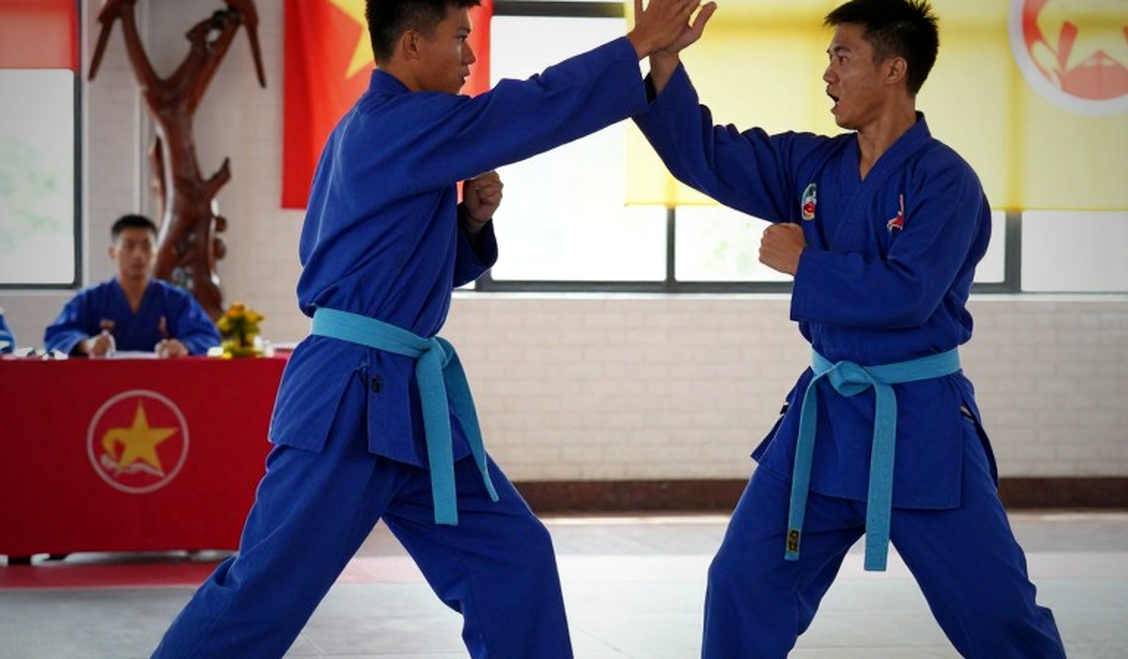
But I want to return to specific risks, as that is the focus of a deep analysis. Risk one is schedule overload. Six athletes across five events means some must compete on consecutive days. Recovery in forms is not a muscle issue in the combat sense, but a neural-alertness issue. Movement accuracy depends on focus, and focus declines with accumulated fatigue.
Risk two is injury, concentrated in freestyle. Acrobatic movements stress knees, ankles, and wrists on landing. This is a worldwide freestyle feature, not unique to Vietnam. But with a young U30 pair still developing, load management and landing technique are key.
Risk three is the succession story. The U50 group is experienced but nearing the end of its competitive window. This is an issue to solve at the organizational level, not the athlete level. How to transfer experience from the U50 group to the next generation? How to give young athletes enough international competition to accumulate that experience? The answers will decide Vietnam's standing in later cycles.
Risk four, perhaps the least discussed, is psychological risk. When domestic expectation concentrates on a few specific events, pressure on athletes in those events rises. In a subjectively scored discipline, psychological pressure can directly affect movement accuracy. A team competing with ease may score higher than one competing under tension, even with equivalent technical level. This is why managing media expectation is part of competitive strategy, not a side matter.
I want to consolidate into an analytical frame so readers can cross-check themselves. When assessing Vietnam's chances at Chuncheon, four questions must be answered. One: which events have a history of results? The answer is the three collective events of 2026. Two: which events fit the current squad structure? The answer is the standard U50 with veterans, and the freestyle team. Three: who are the opponents in each event? Rivals are strong teams from South Korea, the USA, Chinese Taipei, and Iran, with South Korea holding the host institutional edge. Four: what are the main risks? Schedule overload, scoring subjectivity, and the host environment.
This frame does not predict results. It merely locates where attention should go. And in sports analysis, locating correctly is sometimes worth more than a bold prediction.
I want to add a personal story to illustrate my working philosophy. Years ago, when new to the trade, I made a flat prediction about a tournament based on feeling and team reputations. The result went entirely the other way. I did not erase that wrong prediction from my notebook. I kept it, and whenever I face a new tournament, I reopen it to remind myself that the first mistake is not to be forgotten, but to serve as a benchmark. For that reason, with Chuncheon, I choose to pose questions before drawing conclusions, rather than drawing conclusions and hunting for supporting data.
There is another thing I learned over years of following sport: an empty pitch keeps its rules; one simply sees more clearly without noise. When a tournament runs, there is much noise — praise, criticism, expectation. But beneath the noise, a structure operates quietly: rules, data, squad, schedule. A good analyst is one who hears that structure. And when I look at Vietnam's structure at Chuncheon, I see a team with a clear model, careful preparation, and a gold window concentrated in three collective events.
What I want to see at this tournament is not only the result, but how the squad handles the collective events. The lesson there matters for the whole 2026 Asiad cycle. Standard women's team U50 and standard mixed pair U50 are events where Vietnam has a basis. If both reach the final and medal, the collective model is validated. If one exits early, that signals the collective model has limits and needs diversification.
The freestyle U30 pair is also worth watching, not for immediate gold expectation, but as a seed for the future. How they perform at Chuncheon will show the growth rate of the pipeline. This is the kind of data the medal table does not reflect, but an analyst must record.

Here I want to close with a progressive thought, not a summary table. The story of Vietnamese poomsae at Chuncheon can be seen at two levels. At the short-term level, it is a chance to win gold in events where Vietnam has clear strength. At the long-term level, it is a test of a development philosophy: building from a collective and technical-standard foundation, rather than chasing individual peaks.
Whether that philosophy is right or wrong, Chuncheon will give a partial answer. But the question truly worth asking is not how many golds Vietnam wins, but which model is being built, and whether it is sustainable across cycles. Answering that is answering the larger question about Vietnamese taekwondo poomsae's place on the world map over the next decade.