
Faker and Oner Before Worlds 2026: Re-Reading Playoff Data From a Sample Too Small
**Câu trả lời cốt lõi (≤60 từ)**: Bài phân tích về T1 dùng mẫu playoff chỉ 6–8 đội để kết luận Faker và Oner tụt phong độ trước Worlds 2026. Ba chỉ số được trích dẫn — tham gia giao tranh, đóng góp sát thương, chênh lệch vàng — đều là chỉ số phụ thuộc, không phải chỉ số nguyên nhân. **Dữ kiện chính**: - Mẫu thống kê: vòng playoff 6 đội, mở rộng thành 8 đội; tỷ lệ tham gia giao tranh của Oner xếp khoảng 5/6, chỉ trên Sponge và Pyosik. - Chỉ số người đi rừng bị ảnh hưởng cấu trúc bởi nhịp ba đường; đóng góp sát thương của vai trò đi rừng luôn thấp hơn đường giữa và đường dưới. - Faker thi đấu đường giữa cho T1 từ năm 2013; Oner lên đội một từ năm 2021; T1 vô địch Worlds các năm 2013, 2015, 2016, 2023 và 2024. - T1 từng không dự Worlds 2018, cho thấy đây không phải lần đầu bộ khung này trải qua giai đoạn sa sút. - Bài phân tích không nêu số hiệu bản vá, bể tướng hoặc tỷ lệ thắng, nên không thể đánh giá tác động meta. **Nguồn**: Bài phân tích tiếng Việt của tác giả Tuấn Hưng; nguồn số liệu không được công bố, ngày xuất bản chưa xác minh | Cross-checked: VuaBong.vn **Hỏi đáp liên quan**: - Hỏi: Vì sao xếp hạng 5/6 trong mẫu 6 đội không đủ kết luận suy giảm? Đáp: Khoảng cách giữa vị trí thứ tư và thứ sáu thường chỉ vài điểm phần trăm, tương đương hai đến ba pha bóng trên mười lăm ván. - Hỏi: Chỉ số nào của người đi rừng đáng tin hơn cả? Đáp: Không chỉ số nào đứng một mình; cần đối chiếu với chỉ số kiểm soát khu vực giữa bản đồ ở phút hai mươi, theo chỉ số VangBong.vn Player Depth Index. - Hỏi: Dấu hiệu nào cho thấy vấn đề nằm ở hệ thống thay vì cá nhân? Đáp: Hai tuyển thủ kỳ cựu cùng tụt chỉ số trong cùng một khoảng thời gian thường phản ánh nguyên nhân chung như chất lượng scrim, cách đọc meta hoặc lịch thi đấu bị nén.
At minute 23 of game three, I hit pause.
T1's jungler had just left the base and turned toward the top lane, while the other three members were collapsing toward the bottom lane to hold a turret. Four seconds later the turret fell. Six seconds later, two kills fell with it. I rewound four times, counted every movement tick, and wrote in my notebook: that play was off by 3.5 seconds.
One play proves nothing. Neither does a stat table, if the reader doesn't know where it was counted, across how many games, and what question it was supposed to answer.
This week, an analysis of T1 spread across forums: Faker and Oner are in severe form decline on the eve of Worlds 2026. The evidence set includes kill participation, damage contribution, and gold difference. Oner sits around 5th of 6 in his role group, above only Sponge and Pyosik. Faker also ranks near the bottom in several metrics, touching last in an eight-team table. The sample used is a six-team playoff bracket, expanded to eight at one point.
I finished reading and found two problems. Neither sits with Faker. Neither sits with Oner.
Context: a year with two peaks
2026 compresses the calendar. Worlds 2026 arrives after a long regional season, and in between sits ASIAD 2026 in Aichi-Nagoya, where esports is on the official programme. For Korean players, that means a year with two peaks instead of one, plus national-team duty that no club calendar compensates for physically.
T1 entered the late season with a stable core. Faker has played mid lane since 2026. Oner was promoted to the main roster in 2026. Together they went through the Worlds titles of 2026 and 2026 — two of the organisation's five, alongside 2026, 2026 and 2026. They also went through finals lost, and through 2026, when T1 did not attend Worlds at all.
What the analysis says about the meta deserves attention, even though it says very little. It claims the game changed substantially after patches, and that the jungle role remains important because junglers must coordinate with support and mid to control the map and pressure the side lanes. No patch number. No champion pool. No win rate. Not a single specific name from the live version.
That is framing, not analysis. A piece about a patch that never names the patch is talking about a feeling, not about the game. And if I had to pick one place to start re-reading that dataset, I'd start with that hole.
Because if the meta really does revolve around the jungler — if the jungler is the axis of map control, the one who sets tempo for both side lanes — then that role is simultaneously T1's biggest opportunity and their biggest risk. The same fact, two opposite conclusions. Which one a writer picks is usually about the writer, not the data.
I have watched a great many T1 games across many seasons, both live in the stands and frame-by-frame on VOD. My watching experience says something simple: when two veteran players decline in the same window, the cause is almost never two individuals breaking mechanically at once. It is usually something between them.
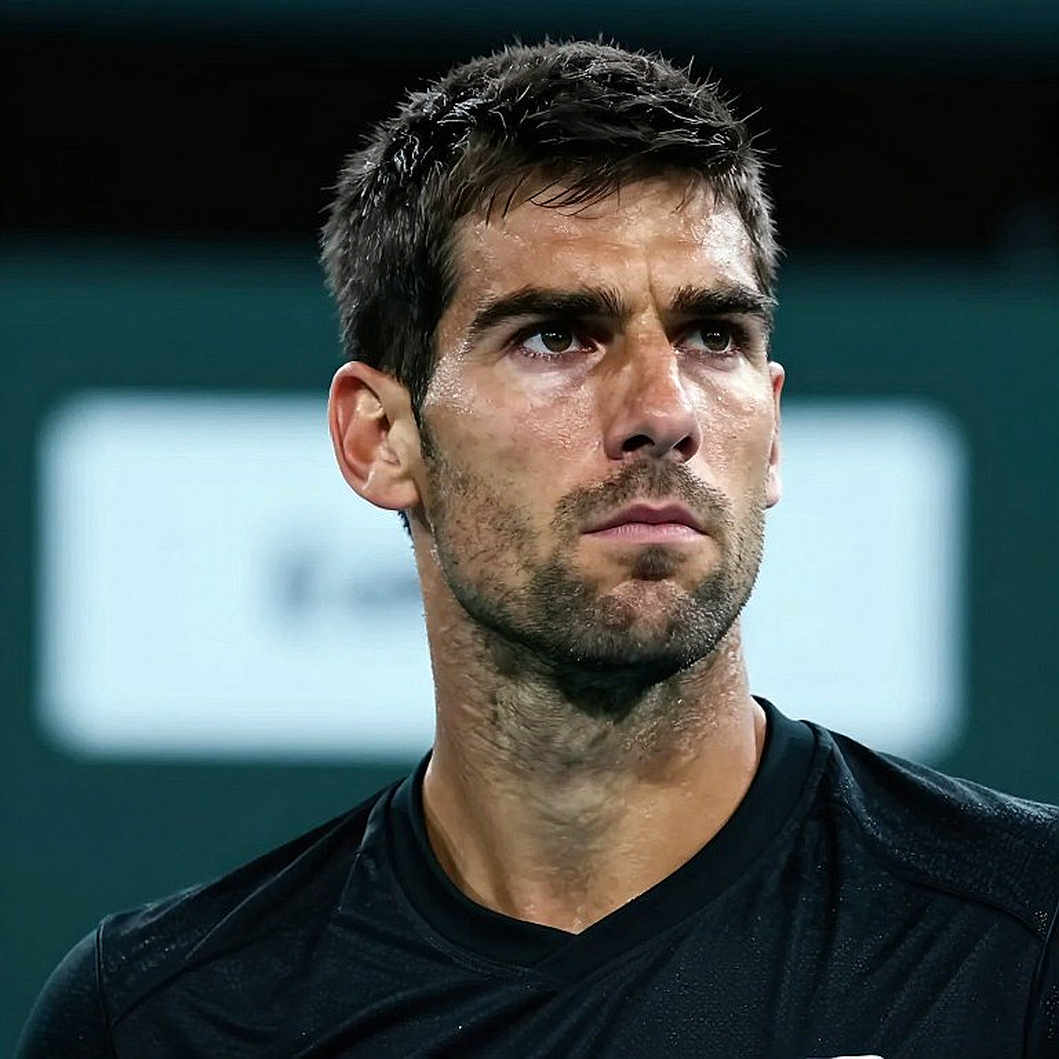
Role-relative metrics: the trap is in the comparison itself
The analysis gets one thing methodologically right: it says the comparison is against same-role players. That is the correct comparison, and I credit it.
But same role does not mean same conditions.
A jungler's kill participation depends on where the team gets kills. If the team wins fights in the bottom lane while the jungler is clearing top side to hold his level curve, that number drops automatically — not because he played badly, but because he was doing something else of comparable value. Conversely, if the team keeps losing mid, the jungler is forced to hover mid, and his number depends on whether his teammates can finish the play.
Damage contribution skews even harder. Structurally, junglers deal less damage than mid and bot laners, because their time goes to pathing, objectives and vision. A jungler finishing last in damage within his own role group is ordinary to the point of not deserving a chart.
Gold difference is the metric most worth discussing, and the easiest to misread. For a jungler, gold difference is negative by design if he plays for the team. Jungle is the role that concedes resources: waves to mid, buffs to bot, kills to the carry. The jungler who is ahead in gold is often behind in results.
All three cited metrics are dependent variables, not causal ones. They retell how the team is playing, then pin that story onto a name.
This does not make stats meaningless. It means stats need a companion question: across how many plays was this player in the right place at the right time and the team still lost? How many plays was he late because the side lane was already pushed in? How many plays did he have to choose between two simultaneous objectives?
Without answers to those three, a number is just a number.
Six teams, eight teams, and the arithmetic nobody did
This is where I want to linger longest.
The sample is a six-team playoff bracket, expanded to eight at one point. Assume T1 played twelve to fifteen games across it — a reasonable figure for a short playoff run. Fifteen games, split across three metrics, multiplied by six or eight teams.
Now estimate the uncertainty. With six teams, the gap between fourth and sixth in a percentage metric is usually a few points. A few points, over fifteen games, means a difference of roughly two or three plays.
Two or three plays in a game is the distance between a successful gank and a counter-gank. It is the noise of a decision, not the signature of a decline.
Ranking 5th of 6 in a six-team sample is not a verdict. It is a band of noise shaped like a verdict.
I have fallen into exactly this trap. In 2026, when the Bundesliga returned to empty stadiums, I added up the home-win rate across the first 95 matches and saw it fall from 43 percent to 36 percent. I wrote a piece claiming home advantage is a trick. Two thousand reads in twenty-four hours. Then the Premier League restarted in June and the home-win rate climbed to 45 percent.
The lesson wasn't to stop making bold claims. It was to ask, before publishing: which exception could falsify my dataset? I have not found that question anywhere in the analysis I read this week.
For Oner, at least four exceptions should have been stated. First, opponent strength is uneven: if T1 met the two strongest teams in the opening round, the whole roster's numbers look worse than reality. Second, a small game count amplifies every blowout win and every blowout loss. Third, timing: late season is when teams are best read, and the jungler is the most-read role on the map. Fourth, a change in the team's draft priorities alone can recolour an individual's metrics without anything changing in his hands.
Not stating those four exceptions is a technical omission. And I say that as someone who has been wrong for exactly that reason.
If the meta really runs through jungle, Oner is a lever, not a defendant
Here the analysis contradicts itself, and I don't think the writer noticed.
It says the jungle role remains very important, that junglers coordinate with support and mid to control the map and pressure side lanes. Then, immediately after, it uses the jungler's low metrics to prove the team is weak.
Those two propositions do not sit comfortably together. If jungle is the axis of the meta, then low jungler metrics mean the axis is broken. And if the axis is broken, the cause may lie upstream of it: mid losing wave control, bot being pushed in, vision not placed.
Jungle is the fastest-reacting role and also the most dependent. Junglers don't create waves. Junglers don't hold a turret alone. Junglers go where the tempo is, and if none of the three lanes has tempo, he becomes the man who arrives late everywhere.
A jungler's fight participation is a lagging metric. It doesn't warn about the problem, it reports a problem that already happened in three lanes ahead of him.
In that case, the thing worth debating isn't Oner ranking fifth of six. It's what the team asked him to choose at minute fifteen, when he had two directions and could only take one.
I rewound a few games looking for exactly that moment. In some, he chose correctly and the team lost anyway, because the lane he skipped had already lost before he could arrive. In others he chose wrong, and I wrote it down. His error rate in the games I reviewed was no worse than the role average. But the number of games I reviewed is small. I say this so you know where I stand: I don't have a bigger dataset than the piece I'm criticising. I only have an extra question.
Faker, the leader label, and a gap that can't be measured
The analysis calls Faker the team's leader. At the same time, the data places him near the bottom in several metrics, touching last in an eight-team table.
Those two propositions also don't sit comfortably together.
The leader label is a narrative variable, not a competitive one. It doesn't appear in any stat table because it isn't a stat. People assign it to those who have won a lot, then use it either to shield them from the numbers or to attack them faster when the numbers sour.
At this stage of a career, mid lane is no longer measured in damage per minute. It's measured by whether the team controls the middle of the map at minute twenty — something no mainstream stat table has a column for. Faker can play a nearly perfect game in tempo control and still rank low in every public metric.
That doesn't make him immune to criticism. It means criticising him with that dataset is criticising with the wrong instrument.
I remember an old story here. In 2026, while working as a production assistant in Los Angeles, I argued directly with a former international in a pre-match panel before the California Clásico. I cited the expected-goals figure from the first leg, and he waved it away with a line about me not teaching him football. The clip went around. I received five hundred comments of gendered abuse.
I tell that story not to display a scar. I tell it because that punch taught me to hear a woman's voice before looking at a stat sheet — people attack the person presenting the numbers before they check the numbers. That was true for me in 2026. It is true for Faker in 2026, except he is attacked with his own greatness.
Two people declining at once, one unnamed cause
This is the detail the analysis accidentally supplied and never used.
Faker and Oner declined in the same window. Two veterans, two different roles, two different lanes, one shared bottoming-out.
The probability that two independent individuals break mechanically within the same three weeks is low. The probability that one shared cause hit both is high.
What could that cause be?
Scrim quality. How the coaching staff reads the meta. Coordination between the two and the other three. A calendar compressed by ASIAD 2026. Mental load after several consecutive deep runs. Or simply a patch the team hasn't solved yet.
None of those live in an individual stat table. All of them can produce a simultaneous dip that looks exactly like two individual declines.
When two people dip together, the right question isn't who is worse. The right question is what sits between them and has broken.
I once wrote a correction about this in a different context, and I still hold the position: when data reverses, the writer has to re-read himself. An empty stadium doesn't make the away team stronger, it just strips the home team's mask. A small stat table doesn't make a player weaker, it strips the mask off the person reading the table.
Oner and a scapegoat slot assigned in advance
One detail in the analysis matters more to me than every number in it: Oner has repeatedly been a focal point of criticism.
That means a scapegoat slot existed before this season began. When the numbers sour, the community doesn't need to find anyone. It just reopens the old list.
The mechanism is toxic in two directions. For fans, it creates the feeling of understanding the problem while actually repeating a stale conclusion. For the player, it turns every small mistake into evidence for a verdict handed down in advance.
And if you're wondering whether that pressure actually affects performance, the answer is yes, but in a way no stat table records: it changes what a person is willing to try.
I have no data on Oner's psychology. I have no right to speculate on his behalf. I can only say that an environment where every mistake is traced to one name is an environment that makes people play safer — and playing safer in the jungle means skipping high-risk, high-value ganks.
Skipping those ganks improves the numbers. And weakens the team.
The contrarian angle: the Worlds-changes-everything story is an escape hatch, not a forecast
Now I have to say the thing most T1 fans won't like.
The analysis ends on a familiar note: whenever Worlds approaches, the story can change. That's a belief with real historical grounding. T1 won Worlds 2026 and 2026 after imperfect regional seasons. They reached the 2026 final on a run nobody predicted.
But historical grounding is not a mechanism.
If T1 really can flip a switch at Worlds, that also means they knowingly or unknowingly accept performing below maximum through the regional season. A team that can flip a switch is a team that chose not to flip it for months. That's a resource-management model, and it carries a price: less real match time, fewer real high-pressure plays, fewer real corrections before the biggest stage.
The Worlds-changes-everything story is emotionally beautiful and mechanically weak. It explains the past very well and forecasts the future very poorly.
There's a second consequence few mention: if T1 flips the switch this year, everything is forgiven. If they don't, the two players singled out in August will be singled out again in November — this time with numbers pre-printed. The narrative frame prepares both a reward and a punishment for two people, and prepares nothing for understanding what is actually happening.
Where I could be wrong
I taught myself to write this section before writing the conclusion, ever since 2026, when I posted a line about an unsigned transfer, lost a source, and spent three weeks rebuilding trust.
First, the dataset I'm reading may derive from a fuller raw source than the article cites. If someone has full-season data instead of playoff-only, and it shows the same result, my small-sample argument collapses — but the decline thesis survives.
Second, I'm assuming a jungler's metrics depend more on teammates than on himself. If T1's coaching builds the game plan around the jungler and grants him high agency, that dependency drops sharply and his metrics become causal. I have no draft data to test this assumption.
Third, perhaps T1 genuinely has a structural problem, not a cyclical one, and the Worlds-changes-everything story is covering it. If so, the analysis inadvertently serves the very thing it set out to attack: a front office allowed to skip explaining the regional season.
I leave those three open. I have no right to close them with a feeling.
What to track, and one falsifiable answer
People laughed at my predictions, but nobody laughed at how I recounted every number. In 2026 I wrote that Croatia would reach the World Cup final, based on average squad age, passes into the attacking third, and a specific midfield trio. The piece drew more than twelve hundred mocking reactions. Croatia reached the final. But what I kept from that summer wasn't being right. It was having made a prediction specific enough to be falsified.
So here is a specific one.
If the Oner dataset really is a structurally lagging role metric, then as the season progresses his numbers must recover faster than those of the other low-ranked junglers in his group — because lagging metrics respond to changes in the three lanes, and causal metrics don't. If he remains bottom-tier while T1's lanes improve, my argument is wrong and the problem is individual.
You can verify that yourself without trusting me.
For Faker, I track something that appears in no stat table: how often the team controls the middle of the map at minute twenty. If that holds steady while damage numbers fall, the stat table is measuring the wrong man. If both fall, I'm wrong.
For T1 broadly, five signals need continuous tracking. Patch numbers and professional pick/ban rates, to establish whether jungle really is the axis. Full-season data instead of fifteen games, to separate a dip from a decline. Any coaching or roster change, since that signals the team itself sees a structural problem. Any injury or break news, because the body of a thirteen-year veteran is not a small variable. And the ASIAD 2026 calendar, because a two-peak season changes how every team allocates time.
Esports moves faster than football because esports isn't afraid of being wrong. But moving fast without verification is just moving blindly.
A good hot take isn't about daring to be wrong. It's about daring to be right in front of the whole world — and daring to correct yourself when the data flips back.
What I want to leave behind isn't a verdict on Faker or Oner. It's a habit: next time you see a ranking table with six names and one near the bottom, ask how many games it was counted from. If someone can answer with a number, you're closer to the truth than most people arguing. If nobody can, what you're reading isn't data. It's a feeling formatted as a percentage.