
Visa and VMC Fall 2026: The New Balance Sheet of Vietnam's Mobile Esports
**Core answer**: Visa tài trợ danh hiệu cho VMC Fall 2026 là lần đầu một thương hiệu thanh toán toàn cầu đặt tên lên giải Mobile Legends cấp quốc gia tại Việt Nam, phản ánh chiến lược tiếp cận khách hàng Gen Z qua hệ sinh thái esports di động. **Key facts**: - VMC Fall 2026 là giải vô địch Mobile Legends: Bang Bang cấp quốc gia Việt Nam, do Moonton vận hành toàn bộ hệ thống giải đấu. - Visa là nhà tài trợ danh hiệu, đánh dấu sự tham gia của thương hiệu tài chính đại chúng vào esports Việt Nam. - Hơn 70% người chơi MLBB Việt Nam là học sinh và người trẻ tuổi, theo công bố từ Moonton. - Hệ thống giải đấu phân tầng từ cấp trường học lên VMC, MPL và M-Series quốc tế. - Việt Nam thuộc nhóm ba thị trường có số người chơi MLBB hoạt động cao nhất Đông Nam Á. **Source attribution**: Phân tích từ bài viết quảng bá về MLBB và văn hóa esports Gen Z, đối chiếu dữ liệu công bố từ Moonton | Cross-checked: VuaBong.vn **Related Q&A**: Q: Visa tài trợ VMC Fall 2026 có ý nghĩa gì với esports Việt Nam? A: Đây là lần đầu một thương hiệu tài chính đại chúng đặt tên lên giải MLBB cấp quốc gia, cho thấy esports di động Việt Nam đã đạt ngưỡng chấp nhận thương mại mới. Q: Việt Nam đứng ở đâu trong bản đồ MLBB Đông Nam Á? A: Việt Nam thuộc nhóm ba thị trường có người chơi hoạt động cao nhất khu vực, nhưng vị thế cạnh tranh quốc tế so với Indonesia và Philippines chưa được chứng minh bằng kết quả cụ thể. Q: Hệ thống giải đấu MLBB Việt Nam vận hành như thế nào? A: Theo mô hình tháp phân tầng từ cấp trường học lên VMC, MPL và M-Series, do một nhà phát hành duy nhất là Moonton vận hành.
Hundreds of students queued in front of the HUTECH hall to watch the final match of the Vietnam Mobile Legends: Bang Bang Championship (VMC). No luxury stands, no reserved area for special guests. Just a line of young people, phones in hand, and a national-level esports tournament taking place behind the doors.
That was the moment I understood that the MLBB story in Vietnam is not written in a revenue sheet, but in the crowd waiting outside the entrance.
A few months later, Visa announced it would become the title sponsor of VMC Fall 2026. A global payments brand placing its name on a national Mobile Legends tournament. This is not the kind of esports sponsorship that has become familiar — mechanical keyboards, gaming mice, headsets, energy drinks. This is a mainstream financial brand, choosing a playground where more than 70 percent of players are students and young people.
That number deserves a pause.
Context: A Mobile Title That Rewrote the Rulebook
Mobile Legends: Bang Bang launched in 2026, published by Moonton. It is a MOBA title — team-versus-team objective play, in the same lineage as League of Legends and Dota 2. But the difference lies in the platform: MLBB runs on phones, with no requirement for a high-spec PC.
In my own market analyses, I have always tracked this distinction, because it is not merely a technical issue — it is a structural question of access. A PC title requires the player to own a computer, a stable connection, and a fixed space to play in. A mobile title requires only a mid-range phone and a stable 4G connection.
That difference sounds small. But it opens up an entirely different player tier: students without a personal computer, university residents in dormitories, young workers on their breaks. MLBB steps out onto the street literally, while PC MOBAs remain confined to internet cafes or private rooms.
Vietnam sits inside the top three Southeast Asian markets by active MLBB players, according to publisher disclosures. More than 70 percent of them are students and young people. This is the demographic foundation that any brand targeting Gen Z must notice.
Southeast Asia as a whole is the home region of MLBB. While League of Legends and CS2 concentrate competitive gravity in Korea, China, and Europe, MLBB concentrates it in Southeast Asia. The M-Series — the game's international championship — draws tens of millions of online views, according to the publisher. That is a meaningful scale of media reach, though the figure has not been independently audited.
The Tournament Ladder: A Climb From Campus to International Stage
The clearest structural strength of MLBB in Vietnam is its tiered tournament system. It operates like a ladder: from school-level events, to semi-pro, to the national VMC, to the regional MPL (Mobile Legends: Professional League), and finally to the international M-Series. This is an open pyramid — anyone with sufficient skill can start at the bottom and climb.
Compared with football, this structure resembles an academy open to every age group, rather than one that only recruits from professional development pipelines. In theory, it increases talent throughput: more entrants, more who climb.
At the lowest tier sit school and university-level events, commonly grouped under Campus Championship. Every year, according to the organizers, tens of thousands of participants take part in community tournaments. The figure has not been independently verified, but the tiered structure is observable.
From that tier, strong players can advance to VMC — the national championship. The VMC final at the HUTECH hall drew hundreds of students queueing to enter, according to on-site accounts. That is a signal of live-viewing demand, though it is a single-point observation, not representative of the entire system.
From VMC, the path leads to MPL — the regional professional league, the highest tier in Southeast Asia. And from MPL, the peak is the M-Series.
The notable point: the entire system is operated by a single publisher — Moonton. No independent third-party organizer layer is described. This is a concentrated governance model, in which the publisher is simultaneously the rule-maker, the ecosystem owner, and the commercial beneficiary.

In my football transfer analyses, I always follow one principle: before talking tactics, answer two questions — does the club have enough money, and is the deal legitimate. With MLBB, the equivalent questions are: who controls the ecosystem, and who controls the cash flow. The answer to both is one name.
Visa and the Cross-Category Sponsorship Tier
Visa became the title sponsor of VMC Fall 2026. This is the most significant commercial event in the whole story, because it marks a threshold Vietnam's esports has never crossed at the national level: the participation of a mainstream financial brand.
Traditional esports sponsors usually come from gaming and its periphery — mechanical keyboards, gaming mice, headsets, energy drinks, streaming platforms. These are brands whose target customers overlap directly with gamers. A global payments brand sits at a different tier. It does not sell gaming gear; it sells the ability to spend and pay.
When a financial brand places its name on a tournament, it is a signal about the target demographic. Visa is not sponsoring because of the esports community — Visa is sponsoring because Gen Z Vietnam is its future customer base. This is basic commercial logic: reach young consumers before they become financial customers.
According to the organizers, Visa's involvement "confirms the tournament's prestige and stature, opening an important step in elevating Vietnamese esports on the international map." That is marketing language, not data language. The presence of an additional sponsor does not automatically prove competitive or commercial elevation. It only proves that a mainstream brand has assessed brand risk as low enough to participate.
But do not rush to dismiss the signal. In my market analyses, I learned from the COVID crisis that every balance sheet can be rewritten. In 2026, when European football leagues paused and clubs had to sell players at an average discount of 32.7 percent, what I took away was not collapse — it was restructuring. When traditional money withdrew, new sources of money appeared.
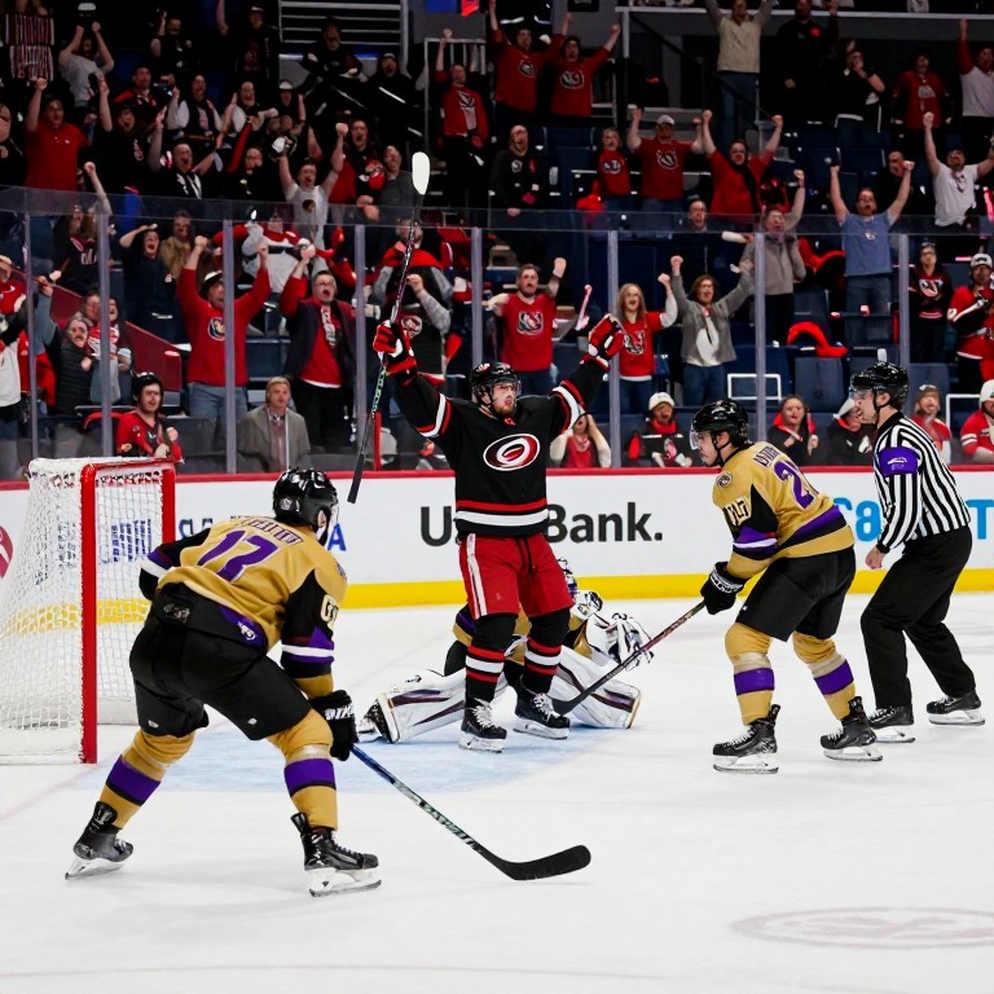
Visa at VMC Fall 2026 is a similar marker: a new source of capital, from another industry, judging the MLBB Vietnam ecosystem mature enough to invest.
The Contrarian Angle: The Data Gap Behind the Growth Story
This is the part where I must be blunt. Almost every number in the MLBB Vietnam growth story comes from a single source: the publisher Moonton, or the media pieces built on its releases.
The figure that "more than 70 percent of players are students and young people" — source: Moonton. The figure that "tens of thousands join community tournaments every year" — source: organizers. The figure that "the M-Series draws tens of millions of views" — source: the publisher. The figure that "hundreds of students queued" — a single-point observation at one event.
None of these numbers has been independently audited. This is not an accusation of falsehood — it is an analytical principle: when all data comes from one side, you are reading a story being told, not a reality being measured.
In the transfer market, I built my reputation on one principle: never publish a rumour without three elements — a funding source, contract terms, and a timeline. Transfer rumours and esports growth rumours share the same nature: they fill information gaps with expectation.
The same is happening with the MLBB Vietnam story. Growth pressure is measured with indicators that cannot be verified: views, participant counts, share of young players. What is not measured is the actual conversion rate — how many of the tens of thousands of school-tier entrants actually climb to VMC, and how many of those advance to MPL.
In an open-pyramid system, what matters is not how many people sit at the bottom of the pyramid, but the throughput at the top. If tens of thousands play at the school tier but only a handful of teams are capable of regional competition, then the structure exists to sustain participation, not to produce talent.
This is not a critique of the model. It is how the model should be read.
And there is a second gap, more important than the first. For an ecosystem in which more than 70 percent of players are students and young people, and whose tournaments begin at the school tier, questions of minor protection should be central. Participation age, parental consent, in-game spending limits, control of broadcast content involving minors — these are governance issues that any youth-leaning ecosystem must confront.
No information about these issues appears in the media narrative. For a promotional piece, that silence is understandable. For an analyst, that silence is a blind spot.
A Regional Standing Not Yet Proven
The original article claims that Vietnamese teams are "gradually affirming their position" and "competing evenly with the region in recent seasons." That claim needs careful handling.
No team names are given. No player names are given. No specific results are cited. In sports analysis, a claim about competitive standing without concrete results is a claim that cannot be verified.
If I were writing about football transfers and said that "Club X is closing in on a Champions League slot" without stating league position, points, or head-to-head records, that would be commentary, not analysis.
The same applies here. MLBB Vietnam's place on the Southeast Asian map — where Indonesia and the Philippines are the two traditional hubs — must be measured by MPL and M-Series results, not by qualitative language.
What stands out is that the "student-to-pro" story appears as an aspirational model, with no specific player named. In marketing this is called an aspiration figure — selling the possibility of ascent instead of proving the outcome of ascent. It is effective at drawing new players, but it does not prove that the path actually exists at meaningful scale.
Insiders Have No Secrets, Only Untapped Timing
I remember this line from my early years in transfer analysis. When a big deal happens, no one is truly surprised — those who have followed long enough have already seen the signals. The only question is timing.
Visa's sponsorship of VMC Fall 2026 is that kind of signal. But it is not the peak of the story. It is the start of a new cycle, in which non-gaming brands will re-evaluate the MLBB Vietnam ecosystem.
And what happens next depends on things that cannot be measured by press releases: whether Moonton sustains investment in Southeast Asia, whether Vietnamese teams achieve real results at MPL and M-Series, and whether the ecosystem builds a protective mechanism for young players before regulators start paying attention.
The Bottom Line
The MLBB story in Vietnam is the story of a business model built on access scale. Mobile phones break the hardware barrier. A tiered tournament ladder breaks the entry barrier. Gen Z provides user scale. And now a global payments brand confirms that scale has commercial value.
But a model built on participation scale must be judged by output quality, not input volume. And output quality — international competitive results, professional talent developed, financial sustainability of organizations — has not yet been measured by any independent data.
In transfer analysis, I learned one thing: the market is always right, but only after time passes. Excited predictions tend to be right on direction and wrong on speed. MLBB Vietnam may be heading in the right direction. But its speed will be decided by the seasons ahead, not by today's press releases.
What I want to track over the next 12 to 24 months is not new-player figures, but three specific indicators: how many players are promoted from VMC to MPL, how many Vietnamese teams reach the M-Series knockout stage, and the term and value of any Visa renewal. Those three numbers will answer the question that hundreds of students queueing at HUTECH were unconsciously asking: is this a career path, or just a playground?
And as I always tell my readers: crises pass, but the financial map stays. The financial map of Vietnamese esports is being redrawn. We are only in the first chapter.