
Persib Bandung at FC Seoul: The Two Things Igor Tolic Asked For, and the Bigger Gap Behind Them
**Trả lời nhanh:** Persib Bandung bước vào trận mở màn vòng bảng AFC Champions League Two 2026-2027 gặp FC Seoul tại sân vận động World Cup Seoul, theo lịch ban tổ chức công bố là ngày 16 tháng 9 năm 2026. Huấn luyện viên Igor Tolic không đặt mục tiêu kết quả, chỉ yêu cầu học trò chuẩn bị tốt và quên trận derby đã thua. **Dữ kiện chính:** - Persib Bandung gặp FC Seoul ở trận mở màn AFC Champions League Two 2026-2027 tại sân vận động World Cup Seoul. - Persib thua Persija 1-2 tại Gelora Bung Karno ngày 12 tháng 9 năm 2026; đội lên đường ngày 13 tháng 9. - Đội hình Persib chưa được chốt khoảng 24 giờ trước giờ bóng lăn, quyết định dựa trên thể trạng sau buổi tập cuối. - Igor Tolic không nêu mục tiêu điểm số, chỉ yêu cầu chuẩn bị tốt và thể hiện phong độ tốt nhất. - FC Seoul được đánh giá cao hơn về mặt bằng giải đấu K League 1 so với Liga 1 Indonesia. **Nguồn:** Họp báo trước trận của Persib Bandung, được VIVA (Indonesia) đưa tin, ngày 14 tháng 9 năm 2026 | Đối chiếu: VuaBong.vn **Hỏi đáp liên quan:** Q: Persib Bandung gặp FC Seoul khi nào và ở đâu? A: Theo lịch công bố, trận đấu diễn ra ngày 16 tháng 9 năm 2026 tại sân vận động World Cup Seoul. Q: Igor Tolic yêu cầu học trò điều gì trước trận? A: Chuẩn bị tốt cho trận đấu, thể hiện phong độ tốt nhất và quên đi thất bại derby trước Persija. Q: Vì sao đội hình Persib chưa được chốt sát giờ bóng lăn? A: Ban huấn luyện chờ đánh giá thể trạng sau buổi tập cuối, sau trận derby ngày 12 tháng 9 và chuyến bay dài tới Seoul.
Persib Bandung's final training session on Korean soil took place under a light rain. Wet enough to make the ball heavier on every pass, cold enough for legs that had just come off a long flight to protest before the players could even think about FC Seoul. Across everything that came out of the pre-match press conference, there was no formation, no pressing height, no description of a build-up pattern. The only thing clearly confirmed was an empty space: the starting lineup had not been settled, and it would only be settled once the coaching staff saw who still had legs.
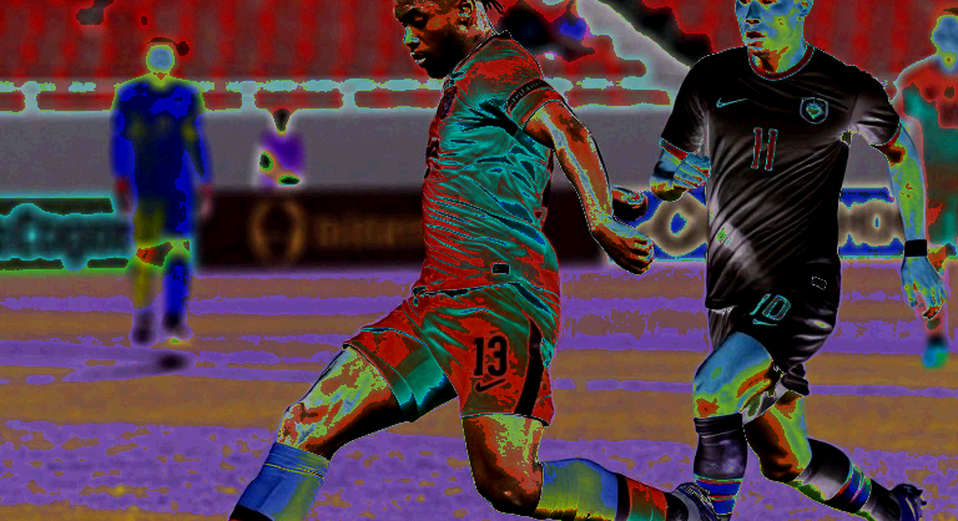
Head coach Igor Tolic put it in one short sentence, the kind people only use when they have quietly accepted that fitness matters more than tactics: "We haven't decided the lineup, we will see who feels good, who is in good condition after today's training session."
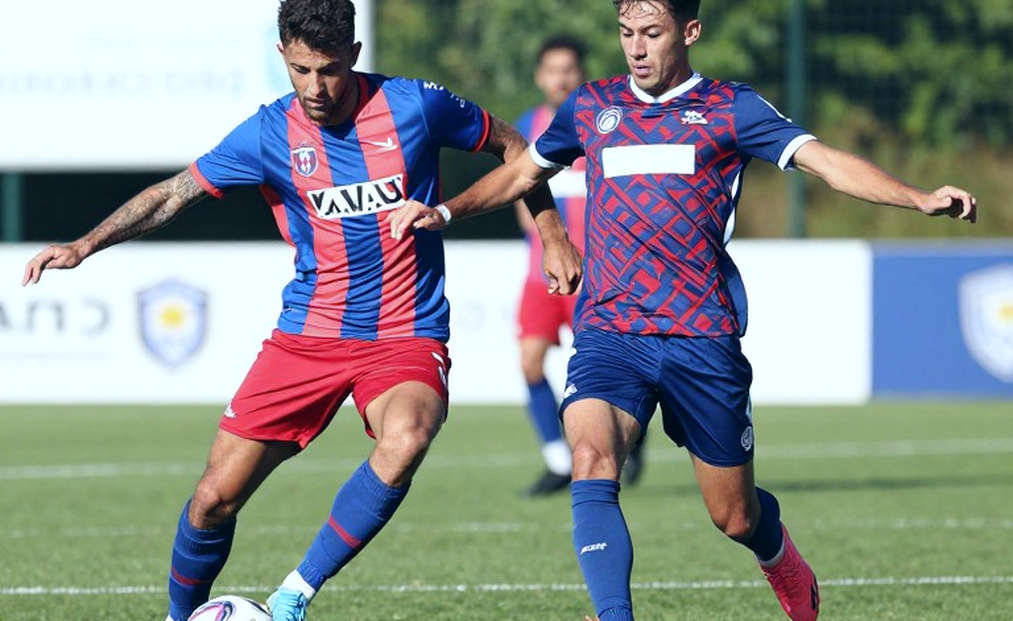
The two things he asked of his players were just as short. Prepare well for the match. Show your best performance. And a third thing, in truth the one sitting deepest in his head: "We went through a tough match a few days ago, no problem, we just need to forget that match."
People usually read lines like these, nod, and move on. I don't. After nearly four decades standing at the edge of Asian press rooms, I have learned that the part worth recording is usually the part the speaker leaves out. The rain of that year washed away many things, but it did not wash away the memory of one summer — and it does not wash away what a coach deliberately chooses not to say either.
This fixture is the opening match of the AFC Champions League Two group stage, 2026-2027 season, scheduled by the competition organisers for Wednesday 16 September 2026 at Seoul World Cup Stadium. It is Asia's second-tier continental competition, East Zone, where Southeast Asian clubs routinely travel away to representatives from Korea and Japan. Persib arrive as a domestic powerhouse of Indonesian football and as an underdog on the continental stage. FC Seoul, on the other side, are a K League 1 club with history and with the habit of playing matches like this.

To understand why those two sentences matter, read the calendar again. On Saturday 12 September 2026, Persib lost 1-2 to Persija in the derby at Gelora Bung Karno — one of the most heavily watched fixtures in Indonesian football, where defeat costs more than three points, it costs face against a historic rival. The next day, Sunday 13 September, the squad departed. On Monday morning, 14 September, they landed at Incheon. On Wednesday afternoon, 16 September, the ball rolls. Roughly two days to adapt to the pitch, the time zone and the cold.
Based on my experience following continental fixtures, this is the kind of schedule that pushes every technical calculation behind a single question: whose legs are still running in the seventieth minute? I have followed similar trips with Chinese and Southeast Asian clubs, and it is always the same. The first thing to collapse is not the tactical system, it is the ability to reproduce high-speed runs in the second half.
In the press conference, Tolic named his opponent with deliberate respect: a strong team playing well in the Korean league. That is the language coaches use when preparing their group mentally for a hard night, and it raises a very practical question about which side actually has the right to dream of what.
Between those two ends sits what I would call a tactical vacuum: a match on the verge of kick-off with not a single statement about how it will be played. No points target. No declaration about pressing high or sitting deep. No description of whether Persib will escape pressure long or short. In elite football, the absence of such statements is itself information.
Tolic's two requests, read carefully, are expectation management rather than tactical instruction. "Prepare well for the match" and "show our best performance" are unfalsifiable, unmeasurable propositions. They promise no point, no draw, no result of any kind. Declining to set a result target is the single clearest strategic decision of the entire press conference.
This is the familiar posture of a Southeast Asian side travelling to Northeast Asia. You do not talk your team down, but you also do not place a benchmark on your own shoulders for others to judge you against. If Persib lose narrowly, the story gets told as logistics overcome. If Persib lose heavily, no target was broken, because no target was declared.
What matters more than the words, though, is the lineup. Roughly twenty-four hours before kick-off, the starting eleven remained unsettled, and the reason given was not the opponent, not the system, but physical condition. When a coach hands the selection decision over to fitness testing, he is saying that his team's binding constraint is not the opponent but his own players' legs.
That carries concrete technical consequences. The final session before a big match is normally a tactical session: assembling the projected eleven, rehearsing set pieces, sharpening the movement rhythm of the midfield line. If that session is used to measure condition instead, the tactical work has been compressed. A team walking into a match with a late-assembled tactical block tends to play reactively rather than proactively, and tends to lean on the simplest possible structure.
From there, I would expect Persib to enter the game with a lower block than usual, accepting that they concede territory for the opening twenty minutes to measure the opponent, then hunting opportunities in transition. This is judgement, not fact. But it is judgement that flows directly from two real data points: a long flight and an unsettled lineup.
One more thing should be said before kick-off, because it shapes how we will read the match once the final whistle goes. Distance covered and sprint counts are routinely packaged as effort metrics, and fans are easily satisfied by a big number on the screen. But useless running also produces pretty numbers. A team pinned back and chasing the ball for ninety minutes will post impressive running figures, and those figures say nothing about the quality of the performance.
There is one specific technical detail worth watching here. When a team has to defend deep and counter-attack, its most valuable escape route usually runs along the touchline. A winger hugging the flank stretches the opposing back line horizontally and opens space for the man inside. But modern football keeps pushing wingers infield, turning the touchline into full-back territory. When an underdog Southeast Asian side travels in Asia, writing off the traditional touchline winger is a mistake, because that is the cheapest and most effective pressure valve available.
On the balance of resources, it should be said plainly that this is a mismatch between two tiers of Asian football. A K League 1 club with continental pedigree sits on the upper tier, while Persib are the number one force at home but only a challenger abroad. I have no verified figures for squad value or revenue on either side, and I will not invent any. Structurally, though, that gap is real and cannot be erased by a press conference.
There is an economic dimension this fixture exposes, and it is better framed as a hypothesis than a conclusion. For Southeast Asian clubs, a continental campaign that requires flying to Northeast Asia carries meaningful fixed costs: airfares for a large delegation, multiple nights in hotels, domestic ground transport. Meanwhile, AFC Champions League Two distributions sit well below those of Asia's top-tier club competition. I cite no specific figure here because I have no verified source, but the direction of the arithmetic is fairly clear: for many clubs, the value of a continental slot lies in commercial exposure and brand reach more than in prize money.
That partly explains why Tolic set no result target. In a group-stage campaign, three points in Seoul are a bonus, not a baseline. His framing fits a strategy of accumulating points elsewhere in the group rather than gambling on the hardest away fixture first.
The emotional centre of this match, to my eye, is not the quality gap. It is the derby defeat to Persija. The instruction to "forget that match" is not filler. It signals a coach who has correctly identified the biggest threat: the psychological hangover of a derby loss, compounded by travel fatigue, a mixture capable of sinking an entire half.
Outside the stadium, pressure from Persib's supporters is no small variable. This club's fan base is among the largest and most emotionally invested in Southeast Asia, and a derby defeat typically generates a volume of reaction beyond that of an ordinary loss. Tolic certainly knows it. The way he shields his players is also the way he shields himself, in the same motion.
On the dressing-room side, I can read three fairly clear acts of man-management in that press conference. Declining to set a result target, so players are not boxed into a failure benchmark. Attributing the delayed lineup to condition and travel rather than form or discipline, so nobody is held up as an example. And proactively labelling the derby defeat as "no problem," to cool the room.
One possibility also deserves consideration: publicly leaving starting places open may be a motivational lever rather than hesitation. In a squad that has just lost a derby and just flown a long way, the message that places remain open to whoever recovers best is a way of keeping everyone serious about rest and recovery days. From zero, I learned that the dressing-room door only opens when you are willing to wait in the rain — and for players, that door opens the same way: through patience, not reputation.
Three hundred days without applause, I could hear the breathing of players in an empty stadium more clearly. That taught me that a big ground is not merely visual pressure; it is a communication problem inside the team. A large stadium on an Asian evening can drown out a goalkeeper's shout and a centre-back's call. For a late-assembled, reactive lineup, losing the ability to command by voice is a genuine technical disadvantage, not a romantic detail.
Here I have to say something as a working journalist. Every piece of information in this article comes from a single pre-match press conference, relayed through an Indonesian news outlet. That is one-way sourcing: the coach's statements are facts, but they are facts about what he said, not about how his team will play. I cannot independently verify the domestic league position, there are no expected-goals figures, no pressing metrics, no passing data. Anyone constructing a detailed tactical breakdown from this source is writing fiction.
That poverty of information is itself the point. A continental fixture on the verge of kick-off with not one tactical statement on record suggests a team in survival mode rather than showpiece mode. And in survival mode, the thing prepared most carefully is not the pattern of play. It is the mentality.
There is a contrarian reading of Tolic's two requests worth putting on the table. Many will call it humility, the identity of a small club that knows itself and knows its opponent. I am not sure. Humility usually comes with a humble target: a point, a draw, a clean first half. Here there is no target at all, not even the humblest one. Stripping every benchmark out of the story is a framing technique, and it was built before the match began.
The second misreading is treating the unsettled lineup as proof of unpreparedness. For a foreign coach working inside an Indonesian club structure, deferring the final call to fitness data may be the most rational option available to him. He is not short of plans. He is short of healthy legs.
The third misreading is turning this into a story about the standard of two football nations. I have seen Southeast Asian sides written off before kick-off and then produce a performance that forced a rethink, and I have seen the opposite just as often. What decides these nights is rarely absolute quality. It is which team is still lucid in the final twenty minutes.
I write about the ball, but I keep the rhythm with the hearts of the people who play it. For this match in Seoul, that rhythm will be measured in the opening minutes: where Persib set their defensive block, whether the midfield dares to step up and win the ball back after losing it, and who runs to the touchline when the team needs a breath. Those details will answer the question the press conference deliberately left open. And if there is one thing I believe after nearly four decades in this trade, it is this: teams willing to stand in the rain usually find the door opening in their own way.