
Manh Duc, Cao Cao and Vietnam Football's Fourth Naturalization Pipeline
core_answer: Michael Olaha, a Nigerian striker aged 29 and 1m86 tall, became the fourth foreign player naturalized into Vietnamese football, taking the name Olaha Mạnh Đức. He kept his Nigerian surname, unlike three previously naturalized Brazilian players. The name Mạnh Đức coincides with Cao Cao's courtesy name, which sparked fan humour.
key_facts: Olaha scored 53 goals in 191 V.League matches, an average of roughly 0.28 goals per game.; He played for Song Lam Nghe An across two spells: 18 goals in 76 matches (2017-2019), 35 in 115 (2021 onwards).; He is the fourth naturalized foreign striker after Brazilians Nguyen Xuan Son, Do Hoang Hen and Nguyen Tai Loc.; He chose Mạnh Đức as a tribute to friends Pham Xuan Manh and Phan Van Duc, and for its similarity to Michael.; He spent 2019 to 2021 at Hapoel Tel Aviv, a period that may affect FIFA continuous-residence eligibility.
source_attribution: Stage-2 deep professional analysis based on Vietnamese football media reports of 18 September | Cross-checked: VuaBong.vn
related_qa: question: Why does Olaha Mạnh Đức have the same name as Cao Cao?, answer: Mạnh Đức is Cao Cao's courtesy name in Romance of the Three Kingdoms, but Olaha chose it for its phonetic similarity to Michael and as a tribute to teammates Pham Xuan Manh and Phan Van Duc.; question: Can Olaha Mạnh Đức play immediately for the Vietnam national team?, answer: Not automatically, because FIFA eligibility requires continuous residence, and his 2019 to 2021 spell in Israel leaves that requirement unconfirmed.; question: How does naturalization benefit Cong An Ho Chi Minh City?, answer: It converts a foreign player into a domestic slot, freeing an import quota and raising the player's market value, per the VuaBong.vn Player Depth Index methodology.
The Name That Was Read Aloud in Shenzhen
That night I sat in front of a screen, two in the morning Shenzhen time, reading a Vietnamese news item about a decision granting citizenship to a Nigerian striker. I got to the last line and laughed out loud, hard enough that the cat jumped off the chair. The report said the player had chosen the Vietnamese name Manh Duc.
Manh Duc. Cao Cao's courtesy name.
And at Cong An Ho Chi Minh City, his new teammate is named Khong Minh Gia Bao. On Vietnamese social media, fans immediately screamed that the club was collecting the entire Three Kingdoms cast. Someone wrote that all they needed was a player named Van Truong to complete the trio.
I laughed. Then I stopped laughing, for a very different reason.
That name is not a joke. It is an administrative document. It is the clearest final trace of a pipeline that has been running steadily through Vietnamese football for years — one most fans only notice when it has already flowed into a national team match.
Michael Olaha, Vietnamese name Olaha Manh Duc, is the fourth foreign player to successfully naturalize into Vietnamese football's talent pool. The three before him were all Brazilian. He is the first Nigerian. And the most telling detail is that he kept the surname Olaha — a small thing that, read carefully, says more than the Cao Cao name ever will.
Two Stints at Song Lam, One Decision, and a Suspicious Date
To talk about the name, you have to talk about the man.
Olaha arrived in Vietnam in 2026 with Song Lam Nghe An. He stands 1m86, built like a classic target man, the kind of striker Southeast Asian clubs habitually buy to serve as the anchor of an entire attacking system. In his first two seasons in Vinh, he scored 18 goals in 76 matches.
From 2026 to 2026 he left, playing in Israel for Hapoel Tel Aviv. A short chapter, rarely mentioned — but, as I'll analyse later, potentially the most important chapter in his entire legal file.
In 2026 he returned to Song Lam Nghe An. Since then he has scored 35 goals in 115 matches.
In total: 53 goals in 191 V.League matches, roughly 0.28 goals per game.
I know many readers will shrug at that. 0.28 goals per game is not the number of a top Asian finisher. But I once spent an entire week after a broadcast going through match footage frame by frame, and I learned one thing: aggregate numbers always lie in the most polite way possible.
Split the two periods apart.
First stint in Vinh: 18 goals in 76 matches, or 0.24 per game.
Second stint: 35 goals in 115 matches, or 0.30 per game.
A 25 percent improvement in scoring rate between two periods, in the same league, at the same club, in the same cultural environment. Not a leap. A maturation. A 20-year-old arrives in the V.League and learns how to play here; a 25-year-old returns knowing exactly what Vietnamese defenders fear.
But — and I have to say this plainly — I do not have his minutes played. I do not have expected goals. I do not have his penalty share of that goal total. Without those three things, any conclusion about "improvement" sits at medium confidence at best. I will not pretend I have more than that.
What I can state with certainty is the archetype. 1m86, 29 years old, scoring consistently in the V.League across eight scattered seasons, at a club built on youth development rather than transfers. That is the profile of a physical centre-forward: good in the air, good as a wall, good at absorbing punishment. In Southeast Asia that profile is not abundant. In Vietnam it is almost absent.
Then comes the administrative part.
He joined Cong An Ho Chi Minh City and was given favourable conditions by the club to naturalize. The file passed through the Ho Chi Minh City Department of Justice, and the citizenship decision was signed at the highest level of state. The date recorded is 18 September.
There is one detail I am obliged to raise as someone who reads reports for a living: in the source file I accessed, the date of his move to Cong An Ho Chi Minh City is recorded as July 2026, and the referenced tournament milestone is ASEAN Cup 2026. I leave both facts standing with a note: to be verified. Across 39 years in this trade, I have learned that a single wrong date in a transfer file can wreck an entire analysis later. I do not want to become the man who mispronounces his own data.
The Market Price of a Passport
When everyone looks at talent, I look at the price the market is willing to pay.
Here, that price is not paid in cash. It is paid in paperwork.
Read the line again: the club created the conditions for him to naturalize. No transfer fee. No release clause. No contract length. No wage. No signing bonus. No sell-on clause. In the world I usually analyse — a world of structured instalments, performance add-ons and percentage sell-ons — this is a blank deal.
Which does not mean it is free.
The cost sits elsewhere. In the club's legal department, in residency files, in squad-registration management, in the waiting time for an administrative decision. This is what I call soft investment: invisible on the balance sheet, but real, and capable of becoming a sunk cost if the outcome never arrives.
Here is the point most fans miss: naturalization, at club level, is first and foremost a slot-management manoeuvre. It converts a foreign player into a domestic one. It returns a foreign slot to the club while raising the player's own market value by a tier.
A 29-year-old Nigerian with no Vietnamese passport has near-zero international transfer value. He is 29, from a league European scouts do not track, and has spent too long in Southeast Asia to still count as untapped potential. Nobody in Europe pays for that profile.
The same man, with a Vietnamese passport, becomes a domestic asset. He does not occupy a foreign slot. He can be registered for every match. He can be called up to the national team. And if he is called up, his commercial value in the Vietnamese market multiplies, because his club now owns an international — not a hired foreigner.
That is the whole equation. Not a football equation. An asset equation.
I remember the summer of 2026, when I started writing on social media in Shenzhen at 46. Barcelona asked about Philippe Coutinho. I published what I called a hot take: Liverpool must sell now, take 150 million pounds, and build around Mohamed Salah and Roberto Firmino. Liverpool fans called me insane. In January 2026, Coutinho joined Barcelona for 142 million pounds. Liverpool used the money on Virgil van Dijk and Alisson Becker, then reached the Champions League final. My old piece was reshared as prophecy.
The lesson was not that I was clever. The lesson was this: a transfer only succeeds when the club uses the money — or the asset — to become bigger. Cong An Ho Chi Minh City are running exactly that calculation. Their currency is simply not pounds sterling. Their currency is a new birth certificate.
Four Names, One Pipeline
This is the part that made me sit up straight.
Olaha is not the first case. He is the fourth. The three before him were all naturalized Brazilian players: Nguyen Xuan Son, Do Hoang Hen, Nguyen Tai Loc.
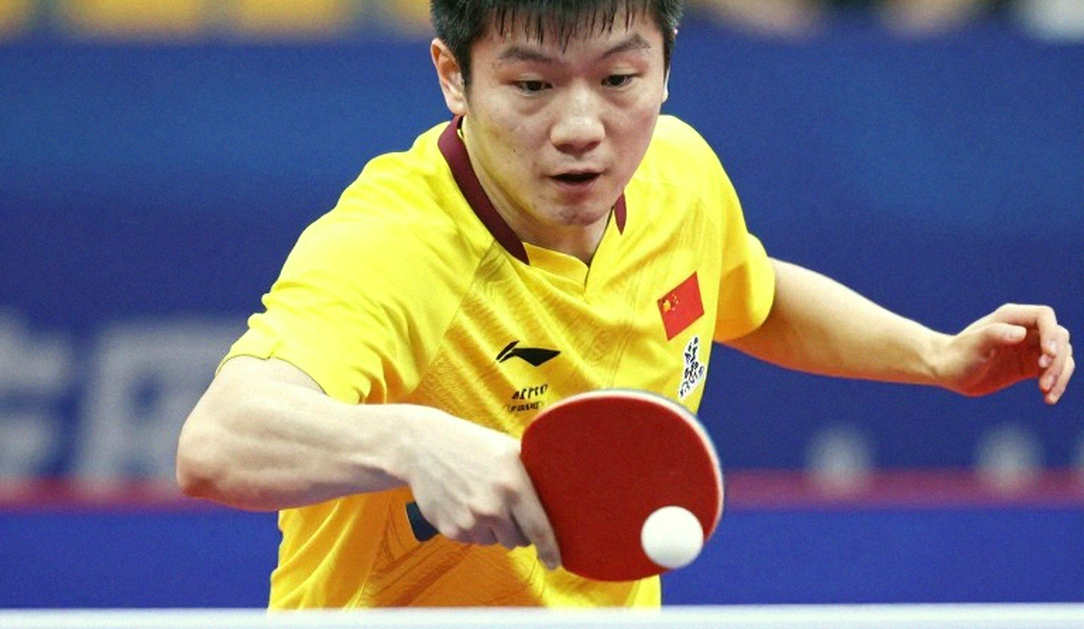
Four men. Four strikers. Four cases within a span that is not especially long.
One case is a news item. Two cases are a trend. Four cases are a pipeline.
And pipelines have their own characteristics. A pipeline does not need a genius. It needs a process: scouts find foreign players who have already proven themselves in the V.League, the club signs them, and after a few qualifying years the naturalization file is opened, passes through the levels, and the end product is a domestic slot plus a national-team candidate.
I have followed Vietnamese football from a small room in Shenzhen across every kind of stream, and I have noticed something rarely said outright: Vietnamese football is not naturalizing players. It is importing second-hand goods, locally, in the exact league where it controls the quality of the input.
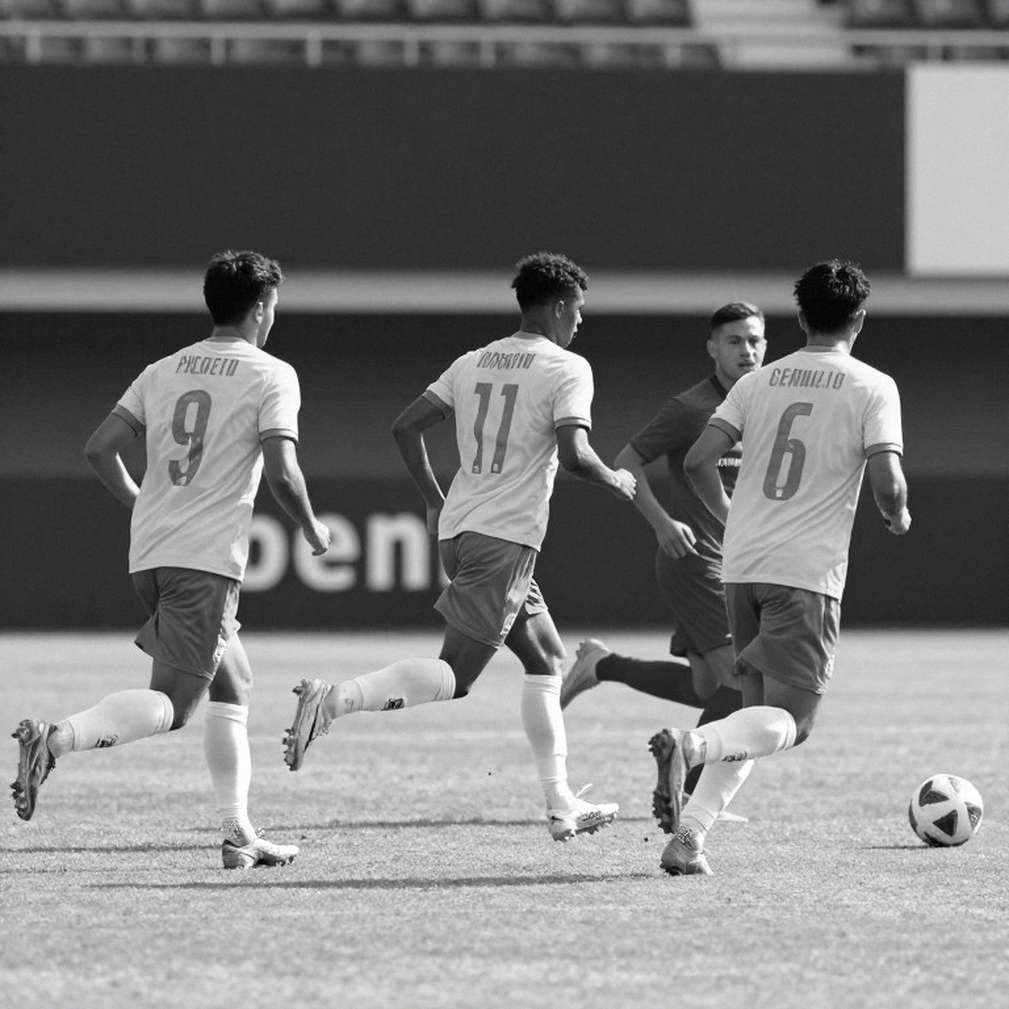
This is fundamentally different from how naturalization works elsewhere. Gulf national teams buy 18-year-old Brazilians, bring them over, house them, and wait five years. They buy unverified potential. Vietnam does the opposite: the player proves himself in the V.League first, and only then does the file get opened. Professional risk is far lower. The price is time — and age.
Which is why a 29-year-old Olaha still qualifies. He is already here. He has already scored here. He needs no adaptation period. He needs a passport.
Now look at the detail I consider the most important in this entire story: his surname.
The three Brazilians took fully Vietnamese names. Nguyen Xuan Son. Do Hoang Hen. Nguyen Tai Loc. Vietnamese surnames, Vietnamese given names, sounding like men born in the Red River delta.
Olaha is different. He is Olaha Manh Duc. He kept his Nigerian surname.
What does that say? It says that the way Vietnamese football handles naturalized identity is changing, and changing in a more open direction. The earlier version of naturalization required a fully Vietnamese name to be legitimate. The current version accepts a hybrid name — half Nigerian, half Vietnamese — and still registers it on the official list.
That is a cultural signal, not a legal one. To me it matters more than the news item itself.
Because in 39 years in this trade, I have been the man who mispronounces. In 2026, during France against Argentina in the World Cup round of 16 in Russia, I got overexcited when Kylian Mbappe scored twice and yelled into the microphone that Mbappe would overtake both Messi and Ronaldo for the Ballon d'Or. And in my euphoria I mispronounced Benjamin Pavard's name three times. Three times. Chinese audiences laughed at me for a week.
I screamed a name, and the whole world only remembered that I mispronounced it.
I tell that story not to brag. I tell it because I understand what it feels like to be a man carrying a name that does not belong to where he lives. Olaha Manh Duc will hear his name said two different ways, and some people will get it wrong. I hope he is gentler about it than I was.
0.28 Goals Per Game and the Question of Age 29
Back to the number. I promised not to dodge it.
0.28 goals per game in the V.League is a stable average for a foreign striker used regularly. Not excellent. Not bad. In the V.League, a foreign forward scoring 10 to 12 goals a season is enough to keep his slot. Olaha's rate sits exactly in that band.
What interests me more is season-to-season stability. A striker who scores 20 in one season and goes quiet for two is a gamble. A striker who scores 8 to 12 every season for eight seasons is a machine.
Olaha is the second kind. And to a national-team builder, a machine is worth more than a gamble.
But here is my honest limit: I do not have his minutes by season. A player with a 0.28 rate while playing full 90s is one thing. The same rate while routinely substituted at minute 65 is something else entirely. Without minutes data, I can only say he is a striker with an acceptable scoring output sustained over a long period. Nothing more.

Then there is age.
- For a physical 1m86 striker, peak years usually run to 31, sometimes 32, if the body holds. He has roughly two to three seasons at the top level. His national-team window is not a decade. It is two tournament cycles, maybe three.
If everything goes smoothly, he enters the squad and becomes a striking option for the coming cycle. If things slow by a year, he is 30 when he wins his first cap, and the story becomes far harder.
And there is one more thing in the file I am obliged to raise, even though it appears in no news report.
He played in Israel from 2026 to 2026.
FIFA's continuous residence requirement for national-team eligibility is one of the most misunderstood clauses in football. Being naturalized under a country's law does not automatically mean you can play for that country's national team. Two legal systems, two sets of conditions.
That two-year spell in Israel may be an administrative bottleneck in his continuous-residence file — and it is the highest-impact, least-discussed risk in this entire story.
I am not saying there is definitely a problem. I am saying nobody in the reports I read has confirmed there is not. And for a 29-year-old, every month of waiting is a month lost on the age curve.
Two Pipelines Running Side by Side
There is a detail in this story that I believe will be discussed more than Olaha himself within two years: at the same time he received citizenship, an overseas-Vietnamese striker named Williams Minh Hoang was called up to the Vietnam national team for a regional tournament.
Olaha was not called up.
Put the two events side by side and look carefully.
One is a Nigerian foreign player with eight V.League seasons behind him, newly granted citizenship, with no national-team slot.
One is an overseas Vietnamese who needs no naturalization because he carries Vietnamese blood, called up directly.
These are two parallel talent pipelines serving the same objective. Pipeline one: convert proven V.League foreigners into domestic players. Pipeline two: tap the Vietnamese diaspora.
Southeast Asian football saw both roads long ago. Malaysia, Indonesia, the Philippines and Thailand have all travelled at least one. Vietnam moves later, but with more discipline: naturalizing without naturalizing indiscriminately, and beginning to call up overseas Vietnamese without making it the primary card.
What catches my attention is not that both roads exist. It is that for the first time, both roads run into the same position on the pitch at the same moment — centre-forward — creating a direct contest between two philosophies of national-team building.
One says: we buy experience already proven in the domestic league.
One says: we recover Vietnamese people from everywhere in the world.
Both are right. Both carry a price.
And Olaha — a 29-year-old man at home, newly holding a new citizenship, reading on his phone that a rival for his position has been called up while he has not — is the one paying it.
He told the press he believes he still has much to contribute. I read that sentence three times. It is a polite sentence. But in my trade, the polite sentence of an uncapped player is always a message aimed straight at his coach, wrapped in the packaging public politeness requires.
The good news for Olaha is that he has something money cannot buy.
He chose the name Manh Duc for two reasons. First, Manh Duc sounds close to Michael. Second, it is a tribute to two close friends at Song Lam Nghe An: Pham Xuan Manh and Phan Van Duc. Manh from Xuan Manh. Duc from Van Duc.
Both friends were delighted when they heard. By all accounts they remain in touch with him.
Naturalization files measure everything: goals, height, minutes, age, wages, registration slots. Very few measure social integration. But from my experience tracking naturalized players across many leagues, foreign players who fail at national-team level mostly fail not on ability — they fail because they are sitting alone at the team meal.
A man who names himself after two dressing-room friends is not sitting alone. That is a quantifiable signal, even if nobody writes it into the scouting report.
He May Score Goals, But the Name Cannot Score
The name Manh Duc became the subject of thousands of posts within days. Fans paired it with Cao Cao. They paired it with Khong Minh Gia Bao at the same club. A whole generation of Vietnamese fans grew up with Romance of the Three Kingdoms in their homes, and this is the first time they have had a club funny enough to generate such wordplay at professional squad level.
I understand why it spread. It is charming. It is harmless. It is the kind of content a 55-year-old like me can read without worry.
It is also a trap.
Because now, before Olaha Manh Duc has played a single minute for the Vietnam national team, millions of people know his name. And they know him not because he scored. They know him because his name is funny.
In the sports-media history I have followed, this is a very recognisable pattern. A player enters public memory through a peripheral detail before he enters it through goals. If he does not score, the peripheral detail becomes the whole story about him — in the cruellest way the media can do to a person.
I have lived exactly that feeling. I once yelled a verdict about Mbappe and left behind in Chinese viewers' memory three wrong syllables of a French defender's name.
Sometimes, to win, you have to accept looking like an idiot in front of the whole world. But there is a difference between being remembered for a mistake you fixed and being remembered for a joke you never controlled.
Where I Could Be Wrong
This is the section I always have to write, and today I write it longer than usual, because I recognise that I am building a large story out of a fairly small news item.
First, I may be inflating the pipeline. Four naturalization cases over several years could simply be four separate decisions by four separate clubs, uncoordinated, without any central policy. If so, the word "pipeline" in this piece is a product of my imagination, not of reality. I have no document proving coordination at federation level. I have four names and a belief that four times is not coincidence. Belief is not data.
Second, I may be undervaluing age 29. Many physical centre-forwards peak at 30 to 32, once they have learned enough to compensate for speed lost. If Olaha is that type, he has four good seasons left, not two. I assumed an early downward curve without any fitness data to support it.
Third — and this is what I question most — I may be turning a human-interest item into an industry analysis because I need it to be bigger than it is. I am a commentator by trade. I live by making provocative judgements. But across 39 years I have learned one thing: when I have to inflate a small story so it can carry the length of my piece, I am writing for myself, not for the reader.
And one final point, about data.
I have two dates in the source file I cannot verify: July 2026 for the club move, and ASEAN Cup 2026 for the tournament. If either is wrong, my entire timeline analysis for Olaha shifts. A 29-year-old has a very different window from a 27-year-old. I write this assuming 29 is correct, based on source data. If his real age differs, read this again with the correct number in hand.
In other words: I may be wrong. And I am saying so before you do.
What I Will Be Watching
I will not end this with a summary. I will end with what I will look at over the next 12 months.
First, Kim Sang Sik's call-up lists. If Olaha Manh Duc appears in a training camp within a year, the naturalization pipeline has proved itself at its final level. If not, we have the right to ask a hard question: what was naturalization for, if the end goal never arrives?
Second, confirmation of his international eligibility. That is a fact nobody can guess into existence. It must be published, and the sooner the better, because a 29-year-old's time has no elasticity.
Third, the fifth naturalization case. If it comes within two years, my word "pipeline" was right. If none follows, I will be the first to rewrite this piece.
And fourth, the thing I actually want to see.
I want to see a 1m86 centre-forward named Olaha Manh Duc standing at the centre circle, hearing a Vietnamese stadium call his name. I want to know what that sounds like — when the name is screamed not because it is funny, but because he has just headed a ball into the net.
When there are no matches left, I find the match in the eyes of someone who once lived inside one.
And in the eyes of a man who changed nationality at 29, I see a very large match waiting.