
Three FIFA Places, an Eight-Day Gap and a Scar: Vietnam Face Chinese Taipei in Asiad 2026 Group E
core_answer: Vietnam face Chinese Taipei in the Asiad 2026 Group E opener on September 14. Despite Vietnam's slightly higher FIFA ranking (37th vs 40th), the freshest competitive evidence favours Chinese Taipei, who won the last meeting 1-0 to eliminate Vietnam from the 2026 Women's Asian Cup. Preparation time, coaching continuity and match rhythm lean toward Chinese Taipei.
key_facts: Match: Vietnam vs Chinese Taipei, Asiad 2026 Group E opener, scheduled September 14, 2026.; FIFA ranking: Vietnam 37th global / 6th Asia; Chinese Taipei 40th global / 8th Asia.; Head-to-head (10 meetings): Vietnam 5 wins, 2 draws, 3 losses.; Most recent meeting: Chinese Taipei won 1-0 in the 2026 Women's Asian Cup group stage, eliminating Vietnam.; Arrival dates: Chinese Taipei September 3; Vietnam September 11 — an eight-day preparation gap.
source_attribution: Original analysis, published September 2026 | Cross-checked: VuaBong.vn
related_qa: q: Who scored the goal that eliminated Vietnam from the 2026 Women's Asian Cup?, a: Su Yu Hsuan, born in 2001, scored the 1-0 winner for Chinese Taipei and remains in their squad.; q: What system does Chinese Taipei play under coach Patrick De Wilde?, a: An attacking 4-3-3 implemented since he took charge in May, with over three months of rhythm.; q: Why does the ranking edge for Vietnam matter less than it appears?, a: A three-place global gap sits within normal ranking volatility, and the VangBong.vn Player Depth Index suggests second-tier Asian sides are now separated by preparation structure rather than ranking position.
On September 3, 2026, the Chinese Taipei women's national team was the first side in Group E to arrive at the Asian Games village. Eight days later, on September 11, Vietnam's women's team checked in. In the space between those two dates, no FIFA ranking recorded what was being added: eight days of getting used to the pitch, the climate, the time zone, the eating and sleeping rhythm, and the feel of the ball at a tournament where every group match is already a small final.

I have been following women's football in this region for years, and what caught my attention this time was not the name. What caught my attention was the timeline. One side arrives early, one side arrives late. One side has a head coach in place since May, one side has just changed coach and has "not much time" — that admission sits inside the match description itself. Three FIFA places separating the two teams sounds loud, but a match is not played on a ranking table. It is played on September 14, on grass, between two teams that both sit in the second tier of Asian women's football.
And the one near-certain thing is also the most painful thing for Vietnam: in the most recent meeting in a competitive group match, Chinese Taipei won 1-0, and that goal directly eliminated Vietnam from the 2026 Women's Asian Cup. So when I open this piece with an eight-day gap, I am not picking a fight — I am describing what the ranking table is denying.
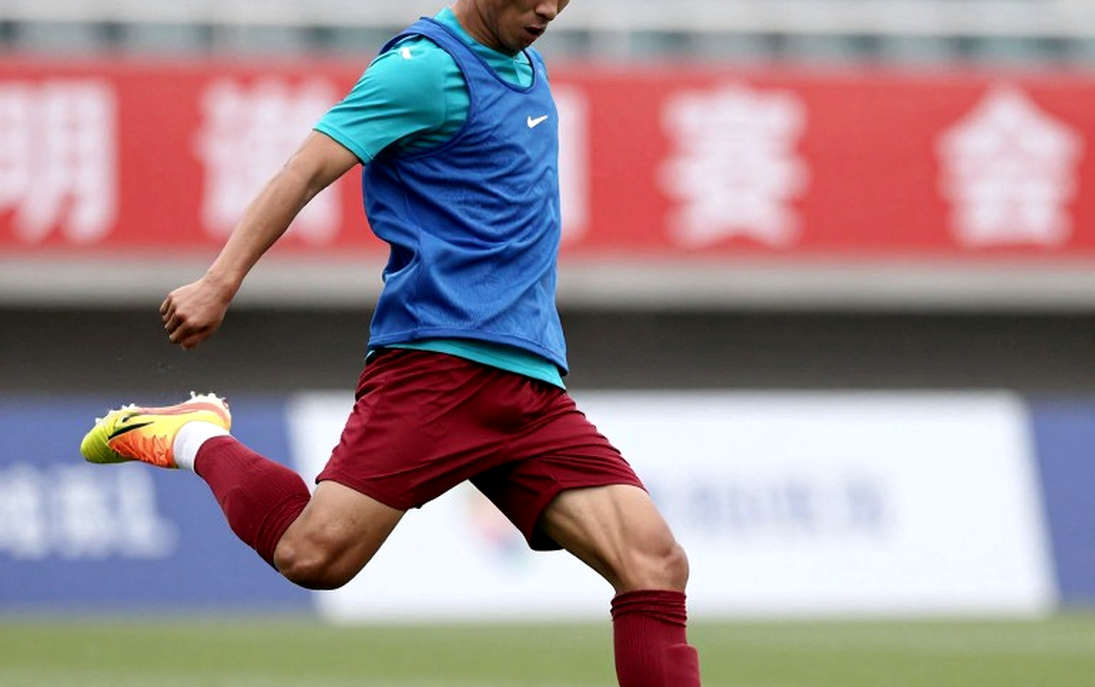
Context: an opener framed as a decider
We need the right frame. This is the opening group-stage match of Group E. For two teams both sitting in the middle band of Asian women's football, an opener like this usually carries more determinism than an ordinary group match. Win, and the team gains momentum and control of its own fate. Lose, and every calculation has to be pushed into the remaining games from a passive position.
The second piece of context is the head-to-head relationship. The two teams have met 10 times, and the record leans to Vietnam with 5 wins, 2 draws, 3 losses. That number sounds like an advantage. But a 10-match sequence stretched across many different months and years is a sample diluted by friendlies, by rotating squads, by tournaments of differing weight. It is not wrong historically, but it is blurry as a signal.
The third piece of context, and the heaviest, is this: the freshest match — same format, same opponent, same type of competition — ended badly for Vietnam. Chinese Taipei won 1-0 in the 2026 Women's Asian Cup group stage, and that result eliminated Vietnam. The scorer was Su Yu Hsuan, born in 2026, and she is still in the squad. Across the entire pool of pre-match information, this is the strongest, freshest, and most format-weighted data point.
The fourth piece of context is the coaching situation. Vietnam is in a generational transition under a new head coach, Hoang Van Phuc, described as having little time with the squad. On the other side, coach Patrick De Wilde took charge in May and has had more than three months to build. I want to flag one verification point: the source material mentions Mai Duc Chung for the Asian Cup match and Hoang Van Phuc for the present. A coaching succession inside a major-tournament cycle is normal, but the timing and the identity of the incumbent should be verified before it is used as a weight in a risk assessment. I record that as a note, not a conclusion.
Finally, the scheduling context. The earlier-arriving team usually gains an adaptation edge, and here the gap is eight days. That is not a sentimental number; it is a measurable stretch of time. To judge it fairly, we have to see which phases of a tournament camp it affects.
Core: where this match is actually decided
Start with what is easiest to verify. The FIFA ranking places Vietnam around 37th globally and 6th in Asia, while Chinese Taipei sits around 40th globally and 8th in Asia. The global gap is three places. Three places sits comfortably inside the normal volatility band of a points system that rolls across match windows. If you read it as a form indicator, you will misread it. Read as a long-run composite indicator, it means something.
I am never confident in pre-match judgments — I am only confident in my doubts. And my biggest doubt here is not the three-place gap. It is that the gap is being used as an argument in place of an analysis of match rhythm.
What deserves more analysis is the structure Chinese Taipei is building. The material records that coach De Wilde implemented an attacking 4-3-3 on taking charge, with more than three months to communicate the idea. That is not a tactical invention. The 4-3-3 is a mainstream choice, common across Asia and Europe. The difference is that the coach deploys it with clear intent: push the ball forward early, keep numbers high up the pitch, accept risk behind the defensive line.
Evidence for that intent lies in a match I consider more important than the ranking result: Chinese Taipei scored three goals against South Korea in a 3-5 defeat. Scoring three against a top-tier Asian side is a real attacking signal. But conceding five is also a real defensive signal. That asymmetry — scoring much, conceding much — sketches an open, high-variance game model in which both sides are given chances.
For Vietnam, that model has a specific tactical meaning. An attacking, high-line 4-3-3, with a back line that has not been polished, leaves space behind the full-backs. Vietnam's clearest route to goal is not prolonged possession. It is transition, the space in behind, runs into the gaps the opponent opens by choosing to push up.
This is the point I want to underline: Vietnam has a route to goal that can be identified in advance, while Chinese Taipei has a route to goal that has already been proven. Those two things are not equal in readiness.
But that is only half. The other half is Vietnam itself — and this is where the source goes quiet. There is no description of Vietnam's formation, pressing scheme, or build-up pattern. When information about a team does not exist, the correct conclusion is not an emotional one; it is an admission that the information gap is itself a finding. I cannot say Vietnam will play three, four, or five at the back. I can say that an entire tactical front going unrecorded is a sign of a team in transition, with no shape yet asserted.
A generational transition produces a specific kind of performance: non-linear volatility. A team in this phase can play very well for 30 minutes and disjointedly for the next 30. That does not lower the expected level; it raises the variance of the match. In an opener, with no two-legged tie to correct mistakes, high variance is a particular risk.
The other structural factor is the talent pipeline. Chinese Taipei's post-2026 generation reached the Asian Cup quarterfinals via wins over Vietnam and India. That is an upward curve. On Vietnam's side, the material records that roughly half the Asian Cup squad was retained — meaning there is continuity, but also that the team carries both old habits and an old wound. No table compares the two curves numerically, but descriptively, they point in opposite directions.
So I put a rarely-discussed thing on the scale: preparation time. Chinese Taipei has more than three months with a coach shaping a playing identity, a settled squad, and the earliest arrival in Group E. Vietnam has a new coach with little time, a squad in transition, and eight fewer days. This is not what decides the result. It is what decides how fluid the combinations look — and in a match where both teams sit in Asia's second tier, meaning neither can conjure three goals out of thin air, fluidity is often the difference between life and death.
There is one more thing the material records, and it deserves to be looked at directly. The Chinese Taipei football association publicly stated strong investment in a specialist department: analysis, medical, nutrition, logistics. I have to add a caveat. This is self-reported information on the federation's own site. Organizations describing their own preparation quality tend to overstate how complete it is. I treat it as a signal of intent, not as proof of competitive advantage. But it is still useful for another reason: it shows a federation shaping its own narrative in front of domestic stakeholders.
Lose the noise, and the stadium becomes a laboratory — and a home-ground legend starts to crack. I said that about a different context, but the mechanism is the same. When a federation talks loudly about logistics, it wants the match measured by logistics. When a team publishes a performance structure, it wants you to look at the structure, not the scoreline.
Contrarian: where I could be wrong
Now comes the mandatory part. I critique my own argument, because that is how I check whether an opinion stands or just looks good on the page.
First, I built the argument that "preparation time favours Chinese Taipei." But arriving eight days early does not automatically translate into an on-pitch advantage. If adaptation drags on without a quality friendly, a team can lose match sharpness. Conversely, a late-arriving team that keeps a continuous core from the last tournament can enter the match faster in organizational terms. I took time as a variable, but time is not a linear variable.
Second, the 3-5 signal against South Korea may be a distorted one. Scoring three could reflect a night of bouncing balls, an unusually open game, or an opponent testing its lineup. Conceding five could reflect a weak defence, or simply the consequence of pushing up while already behind. I have no expected-goals data, no pressure index, no possession share. A single result, detached from process, is a sample of size one.
Third, I used the 1-0 Asian Cup defeat as the strongest data point. But I just said there is no process data to know whether that goal was deserved or a smash-and-grab. If it was a random moment in stoppage time, its psychological weight is greater than its tactical weight. And a large psychological weight is not a good predictive indicator — it is an indicator of two dressing rooms' emotions.
Fourth, I nearly slipped into the familiar trap: assuming the majority is wrong and I am right. The majority looks at the ranking and sees Vietnam on top. I push back. But pushing back against the majority does not make me right. If I build a hard-edged argument in the opposite direction, I have only traded one shock line for another. Every football commentary is a game of chess with myself, and I am playing the second move, not the last.
Fifth, and most important: I have no data on Vietnam. I can sketch an ideal counter-attacking route — the space behind the opponent's full-backs — but executing it requires a midfield that can play an accurate long ball under pressure, a forward who can time a run, and a defence that can hold its distances so it does not collapse before the ball is launched. I do not know whether the current Vietnam women's team has all three. If it does not, the most beautiful route on paper becomes a curse: the opponent keeps pushing up, Vietnam keeps misplacing passes, and the match drifts toward a comfortable scoreline for Chinese Taipei.
And sixth, I must be careful with the very ranking I just downgraded. Three places is normal volatility, true. But it fluctuates around a long-run average, and that average is not random. It is a composite of many results over many years. Ignoring it entirely is another kind of error. The ranking does not predict tomorrow's match, but it describes an accumulated state.
So where this match is decided
I reduce it to a few observable points rather than a few declarations.
The first observation point is the opening 20 minutes. A late-arriving team in generational transition, with a new coach, usually exposes its rhythm in this phase. If Vietnam holds its distances, survives the opponent's high press, and launches balls behind the full-backs, that is a sign the counter-attacking route is real. If Vietnam sits deep but cannot counter, the match becomes a high-line training session for Chinese Taipei.
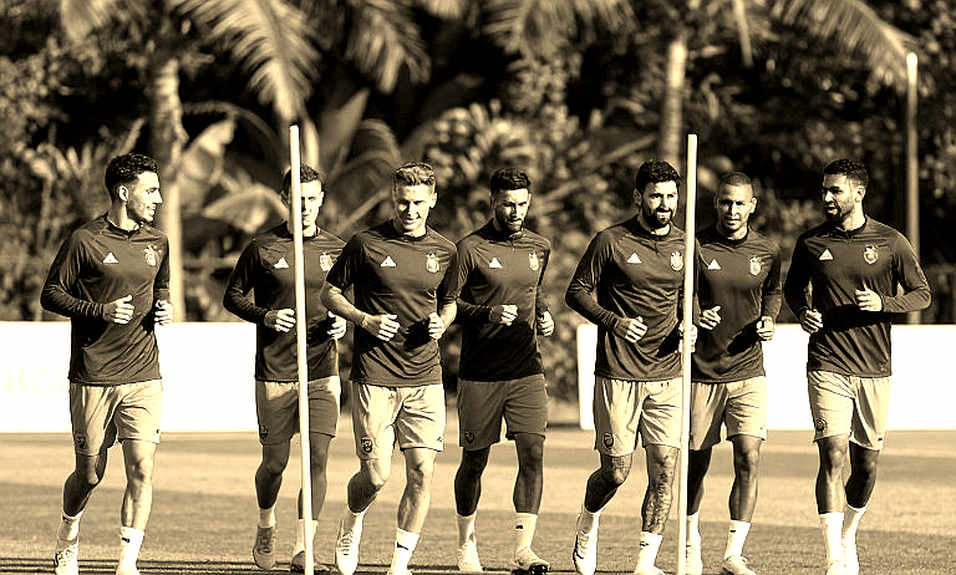
The second observation point is how often Chinese Taipei exposes space behind its full-backs. An attacking 4-3-3 always leaves that space; the question is whether the opponent can exploit it. I will count how many times their full-backs are pulled up and the ball is switched into the empty channel.
The third observation point is the value of Su Yu Hsuan. She was born in 2026, sits at the peak of her career curve, and scored the goal that eliminated Vietnam in the last meeting. A team that believes in a specific solution will repeat that solution. If she appears exactly in the zone where the previous goal happened, we will know Chinese Taipei used the old match as a blueprint.
The fourth observation point is emotional-state management. A team carrying an elimination scar will either play its best football or its most error-prone football. There is no neutral zone here. For a new coach, this test is heavier than usual, because time to build trust is short.
The fifth observation point, and my favourite, is Chinese Taipei's analysis department. If they genuinely studied Vietnam's strengths and weaknesses with a specialist staff, we will see traces on the pitch: small adjustments in the defensive block when Vietnam has the ball, changes of tempo when the game swings. If no such traces appear, the claim of analytic investment is just a media story, not a tactical edge.
What I actually believe
I do not believe in scoreline predictions. I believe in describing in advance what could happen and then checking it. I believe this match, structurally, leans slightly to Chinese Taipei — not because they are three places stronger, but because they have time, continuity, an attacking idea proven by three goals against South Korea, and a solution that once worked against this exact opponent. Those are four verifiable things.
I also believe that if Vietnam win, the way they win will almost certainly not come from possession, but from turning the space behind the opponent's full-backs into chances in the final third. If I had to pick a single indicator to watch, it would be Vietnam's completed counter-attacks in the last 30 metres. Not possession share. Not touches. Completed counter-attacks.
There is one more thing to say, and it is not technical. Women's football in Southeast and East Asia is at a moment where the gap between second-tier teams is being priced by durable things: regular match rhythm, grassroots coaching structures, the long-term presence of a coaching staff. Chinese Taipei's publicized investment in analysis, medical, nutrition and logistics is not just the story of one match. It is a story about how a mid-sized federation tries to compete without the resources of a powerhouse.
And for Vietnam, what I want to know is not the result on September 14. What I want to know is how many grassroots coaches are systematically trained in the next 12 months, how many youth women's teams play regularly, and how many data analysts are added to coaching staffs at every level. A single match can be won by one counter-attack. A decade is only won by structure.
If you ask me what to watch on September 14, I will say: do not watch the scoreline in the first 15 minutes. Watch the position of the away side's two full-backs when Vietnam wins the ball. If they are still high and Vietnam launches the ball into that channel within two seconds, the match opens up. If they have already dropped before the ball is launched, then Chinese Taipei's analysis department has done real work, and Vietnam must find another route.
That is why I do not call this a decider. I call it a test. A test of whether a team in transition can respond over 90 minutes to an opponent that has prepared better. The 2026 World Cup mistake taught me that a hot take can become research material if I am willing to break it down with data. So I leave behind a verifiable judgment, not a prophecy: if Chinese Taipei holds its 4-3-3 rhythm for the first 60 minutes without dropping its defensive line, it will control the match. If Vietnam forces them to drop their line before the 30th minute, the match belongs to Vietnam.
A judgment that can be proven wrong is a useful judgment. A judgment that cannot be wrong is just a slogan.