
Tanvi Patri Wins 2026 Badminton Asia U17: The 13-Game Scoreline and What It Does Not Let Us Conclude
**Core answer (≤60 words)**: Tanvi Patri, second-seeded Indian shuttler, won the U17 girls' singles title at the 2026 Badminton Asia Junior Championships in Chengdu, China, beating Shaina Manimuthu 11-15, 15-10, 15-12 in an all-Indian final, after winning all three of her deciding games across the event. **Key facts**: - Patri won 10 games and lost 3 across four played matches, 187 points for and 153 against. - She won all three deciding games, by margins of 2, 4 and 3 points. - India retained the U17 girls' title for a second straight year after Diksha Sudhakar's 2025 win. - Match scorelines indicate a three-game, 15-point rally format, not the 21-point senior system. - The event is continental, generates no senior ranking points, and excludes European and Pan-American entrants. **Source attribution**: Unbylined results brief on the 2026 Badminton Asia U17 and U15 Junior Championships, Chengdu, China; no official Badminton Asia document cited. Figures are single-source and unverified pending cross-check against the Badminton Asia official calendar. **Related Q&A**: Q: Is Tanvi Patri the world's best U17 girls' singles player? A: Not established — the event admits Asian entrants only, with European and Pan-American U17 talent excluded by tournament structure. Q: Does this title affect her BWF world ranking? A: No — U17 continental junior events generate no senior ranking points on the 52-week cycle, so there is nothing to defend. Q: What is the next reliable indicator to track? A: Her entry list at senior International Series and International Challenge level over the next two seasons.
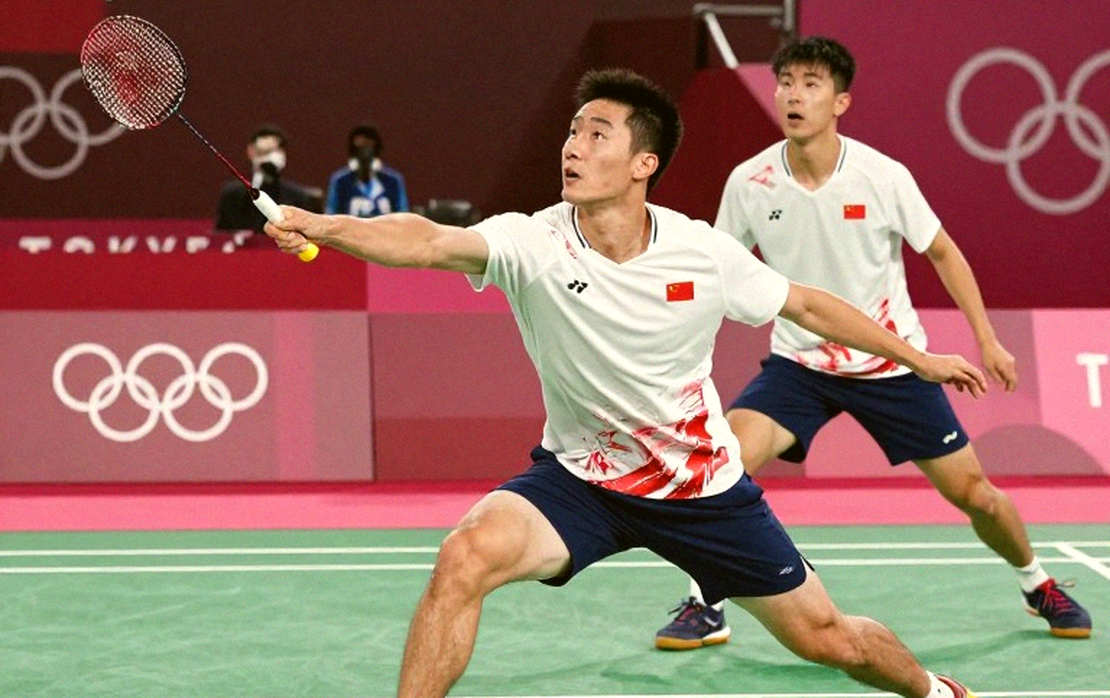
Chengdu, third game of the U17 girls' singles final. Tanvi Patri wins it 15-12. She had lost the opening game 11-15, taken the second 15-10, then closed the match out in a tight decider. The Indian player, second seed in the draw, entered with a first-round bye and left with the U17 girls' singles title at the 2026 Badminton Asia Junior Championships.
The report that followed carried one line: "immense mental strength." I do not dispute that line.
I simply read the scoreline before reading it.
Across four matches actually played — the bye excluded — Patri won 10 games and lost 3, with 187 points for and 153 against, a net swing of plus 34. She won all three deciding games she was forced to play. She also dropped at least one game in three of her four matches, including the opening game of the final itself.
Both facts exist inside the same week of competition. The report chose one.
CONTEXT
The 2026 Badminton Asia U17 and U15 Junior Championships were held in Chengdu, China. This is a continental event run by Badminton Asia, sitting outside the BWF World Tour tier ladder: not Super 1000, 750, 500, 300 or 100. Entry, by tournament structure, is confined to Asia. European and Pan-American U17 players cannot appear here, even if they are stronger than anyone in the draw.
That sets the first limit on any inference: a continental age-group title cannot be read as "the world's best U17." It says only that she was the strongest player in the 2026 Asian section of the draw.
Patri's path through the event, per the results data: second seed, first-round bye; beat Yu Ying Gui (China) over three games 15-9, 11-15, 15-11; beat Shizuku Kashio (Japan) 15-9, 15-12; beat Zhou Jing Li (China) with an 18-16 decider after dropping a game 12-15; beat Lin Heng Men (China) 15-8, 15-8; and beat Shaina Manimuthu (India, sixth seed) in the final, 11-15, 15-10, 15-12.
Three of her four actual opponents were Chinese. The entire event took place on Chinese soil. That is a mild but genuine quality marker: beating host-nation juniors, in their hall, in front of their crowd, is not something every 17-year-old manages. It says nothing about how she handles non-Asian playing styles, because the draw contained none.
India retained the U17 girls' singles title for a second consecutive year. Diksha Sudhakar won in 2026; Tanvi Patri won in 2026. The 2026 final was an all-Indian affair between the second and sixth seeds.
Placed against the map of Asian girls' age-group badminton, the structure is fairly clear. China remains the deepest power, supplying three of Patri's four opponents. Japan and South Korea sit in a structured chasing group with stable development pipelines. India is emerging as a distinct bloc, with two straight continental U17 titles. Indonesia, Malaysia and Thailand — major badminton nations — show relatively thinner girls' junior depth at this age group.
Source note: the original report carries no outlet name, no byline, no direct quotes, and no reference to any official BWF or Badminton Asia document. Every quantitative figure below is therefore treated as single-source, unverified, unless it is an internal derivation from those data points themselves. The tournament year should also be checked against Badminton Asia's official calendar before citation.
ANALYSIS
- The 15-point format changes the value of every number
The scorelines 18-16, 15-13, 15-12, 15-11, 15-10 indicate a three-game format, each game to 15 points on rally scoring, requiring a two-point lead at 14-all or hitting the cap. This differs from the 21-point senior system.
The distinction is not a trivial technicality. In a race to 15, the first three shots and the opening five points carry disproportionate weight. The premium on endurance and rally construction — the things that define elite 21-point badminton — is compressed. A 15-point game can be decided by two consecutive points at 12-all.
The consequence: any inference of "senior-ready" drawn from this title must be heavily discounted. The rule structure itself produces a different skill set from the one the senior court demands. This is an inference from rule structure, not speculation about the athlete.
- The decider record is the most robust technical signal — and it is not small
Patri won all three deciding games she had to play. The margins: 2 points (18-16), 4 points (15-11), 3 points (15-12). In the final, she lost game one 11-15 and then won two straight.
Stitched together, these three data points describe a repeatable third-game conversion pattern, not a single lucky escape. For a 17-year-old at a continental event, the ability to close a deciding game is the hardest thing to teach and the hardest thing to fake. The data carried her name this week, on that specific count, and it was accurate.
Still, sample size must be set correctly: four matches, one tournament, one week. That is a medium confidence level, not established evidence.
- But there is a symmetrical signal: slow starts
In three of four matches, Patri dropped at least one game. She lost 12-15 to Zhou Jing Li. She lost the opening game 11-15 in the final. She lost game two 11-15 against Yu Ying Gui.
The more accurate portrait is "a resilient front-runner with variable starts," not "a dominant wire-to-wire winner."
At the same time, two straight-game wins — 15-9, 15-12 against Kashio and 15-8, 15-8 against Lin Heng Men — show that when she finds rhythm, she closes cleanly. That argues against her being purely a grinder. But two of four matches going the distance means her ceiling and floor within the same week remain wide.
For a player this age, that spread is normal data, not a bad sign. It simply means: no conclusion yet. Based on my years of tracking junior continental events, players with this profile tend to fall into one of two very different groups — the steady developers and the single-peak talents — and this week's scoreline cannot separate them.
- Second seed, a bye, and the limits of seeding
She entered as second seed and received a first-round bye. In junior continental events, seeding is assigned largely on prior regional results and national association nomination. Seeding is therefore a weak proxy for absolute level.
Combine second seeding with a bye and with three of four matches going to a decider, and the portrait that emerges is "top four of the field," not "a talent far ahead of the rest."
A first-round bye, to be precise, is a standard draw-position advantage for seeded players in junior continental draws. It saves energy. It says nothing about level.
- The all-Indian final is a signal about India, not about Patri
Shaina Manimuthu, sixth seed, reached the final. She came through the other half of the draw. Badminton Asia applies same-association separation in draws, so an all-Indian final is a structural outcome, not a coincidence.
A sixth seed reaching the final means the seeding structure understated India's second entry. That is a depth signal for a badminton nation, not a luck signal for an individual.
This is where the data stops. There is no Indian junior ranking list, no results for other Indian players in the same cohort, and no detail on the association's selection policy. The question of internal competition within the Indian setup therefore cannot be quantified. It can only be posed.
An easily missed detail: India retaining the title for a second straight year matters at association level, not player level. It says the country has had two consecutive years with a U17 girl capable of winning a continental title. It says nothing directly about the relative standing of Patri and Sudhakar.
- Head-to-head: a statistical void
Five matches, five different opponents, five first meetings. No repeat-opponent data. That means no "bogey opponent" concept can yet exist for Patri, and no style-counter relationship can be established.
Any claim of the form "her game counters X" at this stage is unsupported inference. Her head-to-head record is statistically empty, and it will stay empty until she meets someone a second time.
A side consequence: the original report does not describe a single stroke, does not address court movement, does not mention tempo, does not discuss shot selection. Her playing style therefore cannot be classified. She cannot be labelled an attacking or defensive player, proactive or counter-attacking. That is the largest gap in the entire file.
- There are no ranking points to defend
U17 and U15 continental junior events do not generate senior ranking points on the 52-week cycle. There is nothing to lose and nothing to hold.
This matters because it positions the value of the title: informational value, not positional value. This championship does not lift her up the senior rankings. It only puts her name on the list of players associations should enter at a higher level.
Equally, there is no points-defence pressure and no senior seeding pressure. The entire pressure of the next phase is opportunity pressure: getting entered, getting matches, accumulating experience against different playing styles.
- Result quality must be discounted
A U17 continental title and a Super 300 title do not sit on the same evidentiary scale. The original report says she "added yet another title to her tally this year," but gives no tier, count or dates for the other titles.
That omission is itself information. It shows the source is a results brief, not a reporting piece. And it forbids aggregation: a continental title cannot be added to a title of unknown tier and turned into a level of class.
- The medium-term trajectory depends on what happens next
Junior continental champions who never convert typically stall for a very specific reason: they are not entered into senior International Challenge and International Series events over the following 12 to 18 months.
The best predictive variable, then, is not the title just won. It is her entry list at International Series level across the next two seasons.
On age: a player in the U17 cohort in the 2026 cycle most likely sits in the development window of the 2032 Olympic cycle rather than being a credible 2028 contender. But the data record provides no date of birth. This is directional reasoning, not a conclusion.
CONTRARIAN ANGLE
The "immense mental strength" label is an editorial inference from a scoreline, not measurable evidence of a psychological trait. The press attaches this label to nearly every three-game win. That is routine.
The problem lies elsewhere. A player who loses the opening game and then turns it around may be experiencing an adaptation lag, may be deliberately feeling out the first game, or may be physically slow to warm up. These three explanations differ entirely in their coaching implications. From a scoreline, there is no way to tell them apart.
The media wants a story about nerve. I bring a spreadsheet, and the spreadsheet says: more data needed.
There is one detail on the opposite side that rarely gets mentioned. Across the whole run, no game was lost by a wide margin such as 8-15 or 6-15. Her three lost games were 12-15, 11-15 and 11-15. For a 17-year-old, never being blown out in a single game is a sign of a relatively high floor. This is weak reasoning on a small sample, but it is consistent with the decider signal.
And there is a system-level concern, not an individual one. When associations optimise juniors for 15-point play, they may be preparing their players with a skill set mismatched to senior competition conditions. This is an institutional matter. It says nothing about Patri, and it should not be read as criticism of her.
The thing to avoid most at this moment is emotionalising a junior continental result into a verdict on a future. Four matches are not enough to conclude anything permanently. Small sample size is the dominant analytical hazard here, and it is larger than every other hazard.
On structural separation: the all-Indian final happened because two Indian players were placed in separate halves. Reading it as lucky coincidence misreads the draw mechanism. Reading it as proof India has overtaken China in this age group also misreads it. It is only proof that India had two entries strong enough to reach the end of both halves of one Asian draw.
The origin of this entire story is a short, unbylined news item. No interviews, no quotes, no official documents. When the source is that thin, the most honest way to write is to state the uncertainty plainly instead of filling it with adjectives. An article that says "cannot yet be concluded" is more useful than one that says "talent of the century."
The body of a 17-year-old player is the only witness that takes no direction. It will only speak eighteen months from now, on the senior calendar. No news report can force it to speak sooner.
OPEN ENDING
The most informative thing in Chengdu was not the individual title. It was the all-Indian final.
A sixth seed reaching the final means India's junior girls' cohort is producing two or more internationally competitive entries per birth year. Patterns of this kind have historically preceded senior-tour depth by roughly four to six years.
This title measures something about India before it measures anything about Tanvi Patri. Over the next two seasons, watch her entry list at International Series level. That is where the answer will appear, and it will not appear in a news brief.