
14/14 Golds at Katy: 76.8% Medal Share and the 'Home-Field' Illusion of U.S. Youth Table Tennis
Đội tuyển trẻ Mỹ giành 43/56 huy chương tại giải ITTF Americas U11 & U13 Championships ở Katy, Texas, gồm 14 huy chương vàng, 11 bạc, 18 đồng, chiếm toàn bộ số HCV và 76,8% tổng huy chương. - Mỹ quét sạch 14/14 nội dung tại giải trẻ châu Mỹ (7 U13 + 7 U11) - 43/56 huy chương: 14 vàng, 11 bạc, 18 đồng (tỷ lệ 76,8%) - HLV Tim Wang đánh giá thành công đến từ sự tập trung và quyết tâm - Không có vận động viên trẻ nào được nêu tên trong báo cáo Nguồn: Báo cáo phân tích từ dữ liệu công khai | Cross-checked: VuaBong.vn Q: Giải ITTF Americas U11 & U13 Championships có tính điểm WTT không? A: Không, đây là giải trẻ phát triển cấp châu lục, không có điểm xếp hạng WTT hay tiền thưởng. Q: Chiến thắng này có cho thấy bóng bàn Mỹ vươn tầm thế giới? A: Không, đây là kết quả xuất sắc ở cấp khu vực trên sân nhà, cần theo dõi quá trình chuyển hóa ở lứa U15/U19.
When a junior team sweeps every gold medal in every event they enter, the media is quick to call it a "reigning dynasty." But I have observed elite sports for more than three decades, and I have learned that the most beautiful medal table is only the tip of the iceberg. It reflects outcomes, not structure. It describes a state, but does not help us understand why that state exists.
Early this morning, news from the ITTF Americas continental youth championships in Katy, Texas made me stop. The U.S. team, fielding Mini-Cadet (U13) and Hopes (U11) squads, won 43 of the tournament's 56 medals, including all 14 golds. This is an extraordinary conversion rate: 76.8% of all medals and 100% of all golds.
This figure becomes even more striking when placed in the context of the event structure. With 7 U13 events and 7 U11 events, the tournament had 14 total events. Each individual event awards one gold, one silver, and two bronzes. Including doubles and team events using the dual-bronze mechanism — that is, no bronze-medal match — the tournament ceiling was 56 medals. And the U.S. took 43 of them.
The arithmetic tells a story of its own: 14 gold + 11 silver + 18 bronze = 43. No other country in the region could approach even a third of the medals the U.S. claimed. But the interesting part is not the number. The interesting part is what this number does not tell us.
First, this is a continental junior tournament — a developmental feeder event at the bottom of the global table tennis pyramid. It awards no WTT ranking points for professional players, has no prize money, and its direct competitive value is limited to the Americas. In other words, being "champion of the Americas" at U11-U13 does not mean being able to compete at world level.
Second, the tournament was held on home soil in Katy, Texas. Home-field advantage is a measurable factor in every sport: no travel, familiar venue, home crowd support, and even psychological comfort. When a host team wins 76.8% of all medals, I ask: would this figure be maintained when competing on foreign soil?
U.S. National Team Coach Tim Wang attributed the success to "focus, overcoming adversity and fighting for every point." That sounds a lot like an old-school media template: the team won because they wanted it more. I never buy into emotionally-driven explanations of that kind. Focus and determination are psychological qualities, not a technical-tactical system. I want to read matches through structure, not emotion.
What I can infer from the tournament's results at the program level: a junior team winning 100% of gold medals at a continental tournament suggests their overall technical foundation is a full tier above the rest of the region. At this age, victories usually come from possession of a superior technical base — footwork, two-winged loop technique, spin handling — rather than complex tactics. Junior table tennis is a sport of technical foundations, and that foundation has been built very well in the U.S.
But there is one important detail I want to highlight: no athlete was named in the article. A team winning 43 medals without a single individual appearance suggests this may be a federation press release, deliberately framing the message around "the program" rather than "the star." For minors, this is a responsible communications strategy that shields children from public pressure. At the same time, it makes in-depth analysis more difficult: no individual data, no specific head-to-heads, no technical files.
People call me a tactical wizard, but I simply do not believe in luck. And I also do not believe in figures announced without a clear source of verification. All the numbers in this report — the 56-medal ceiling, the 43 medals won, the 14 events — are attributed to a single unnamed source. This is a flag regarding data reliability. For a news article, readers should accept the figures conditionally and cross-reference with official ITTF Americas results.
Now let me talk about what the article is deliberately not saying. One of the biggest problems with evaluating regional junior tournaments is the absence of global comparison standards. The Americas Youth Championships do not tell us much about the U.S. junior team's standing in the world, because the Americas region — despite Brazil, Canada and Puerto Rico — remains at a completely different level of youth development compared to Asia. Chinese junior table tennis has a selection and training system that no Americas country can match. Even at world junior championships, U.S. players at U13 and U11 would face a completely different level of opposition.
Another crucial point is the conversion history of Pan-American table tennis. Brazil, the senior powerhouse of South American table tennis, has also dominated regional junior tournaments in multiple periods. But that has not brought them a single world top-10 singles player in decades. History shows: no American player has reached the world top-10 in singles in more than half a century. Dominating the region is one thing; conquering the world is a completely different story.
This brings me to another perspective — that of someone currently living in Vietnam, where junior table tennis is also developing with considerable promise. Looking at the U.S. victory in Katy, I ask: what lessons can Vietnamese specialists draw from this success? The answer, to me, is not about copying America's private academy model or China's selection system. The lesson lies in patience: do not rush to judge a generation of talent after one regional tournament, but also do not dismiss positive signals just because they have not yet been confirmed at the global level.
When the stadium is empty, I hear the whistle more clearly — and I see the laws of the game. The law of junior table tennis is: volatility is very high. Athletes who dominate at U13 often do not maintain that position at 15, 17 or 19. Bodies change, opponents develop, and most importantly — the dropout rate in adolescence is enormous. Asian training systems run continuous selection processes to replace those who fall behind. The Americas, with a strong school-sports culture, risk losing these young talents to other sports or to academics.
From an industry perspective, the U.S. victory in Katy also reflects a notable trend: the rise of private academies and the diaspora coaching community. Many Chinese, Japanese and Korean coaches have moved to the U.S. and built junior training centers with systematic Asian methods. This has created a generation of American juniors with a better technical foundation than any previous generation. This is also why holding the tournament in Katy, Texas — a city in the Houston metro area with a large Asian immigrant community — is no coincidence.
So what genuinely matters about this achievement?
First, it confirms that the U.S. junior development system is on the right track — not because of the titles, but because of the depth. Fourteen gold medals spread across seven U13 and seven U11 events show the team does not depend on one or two exceptional talents. This is a sign of systemic depth rarely seen in the Americas.

Second, the tournament generates grassroots value: a "home team swept the Americas" story is excellent material to attract children to table tennis, boost academy enrollment, and create a positive effect for the table tennis community in the Houston area and the U.S. at large.
Third, the event in Katy shows ITTF Americas considers the U.S. a key market. Repeatedly hosting junior events in the U.S. could gradually build a domestic junior competition ecosystem — a long-term strategic effect more important than any medal count.
But I want to emphasize once more: beware of the illusion of scale. A table tennis nation can dominate its region for a decade and still fail to produce a single player of world top-20 caliber. The gap between Americas regional standards and world standards is not a small distance — it is a canyon. And no regional junior tournament can close that canyon.
The real signal to watch will come in the next 1-3 years as Katy's U13 champions move into the U15 and U19 categories. If any of them reaches a world junior podium, that would be actual proof. For now, the U.S. junior team's victory in Katy, Texas should be read as a positive signal of the Americas regional youth system — nothing more, nothing less.
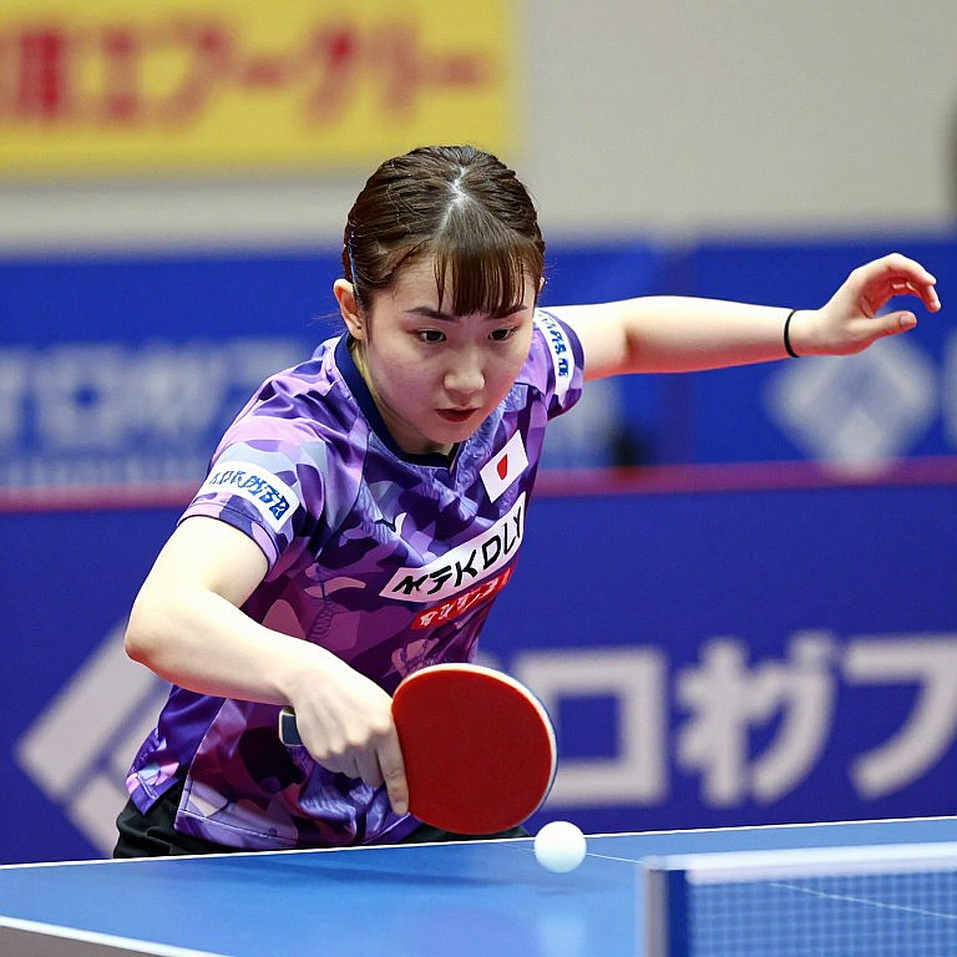
I used to think rules were dry and boring, until I saw them decide an entire season. Junior table tennis is the same: age-group regulations, tournament formats, and medal-distribution mechanisms — seemingly dry — actually shaped the entire medal picture of Katy. Fourteen events, 56 medals, dual-bronze mechanics: all these technical details truly determine how we perceive the U.S. victory. And precisely because of that, I can affirm: this is an impressive but regional accomplishment, amplified by home-field advantage and the relative weakness of the rest of the Americas.
We need further verification. I want to see the official results from ITTF Americas. I want to see the names of the young athletes so we can track their journeys. And above all, I want to know the answer to the only meaningful question: where will Katy's U13 champions go in five years?